Birthplace Citizenship Is Incompatible With Mass Immigration
The article discusses the recent Supreme Court decision upholding birthright citizenship under the 14th Amendment, highlighting the controversy and the dissenting opinions that criticize the majority’s reasoning. The author warns that the ruling’s negative implications are exacerbated by the current U.S. immigration policies, particularly under the Biden administration, which has facilitated large-scale illegal immigration. He argues that granting citizenship to children born to foreign nationals in a context of mass immigration risks transforming the American identity, as it blurs the meaning of citizenship and encourages unassimilated communities with loyalties outside the U.S. If unchecked,this could lead to America becoming a fragmented,multicultural society with declining cohesion,similar to Europe’s experience with immigrant communities. The author contends that historically,birthplace citizenship worked as a tool for assimilation,especially when immigration was controlled,but recent changes and policies threaten to engulf the nation in permanent,disloyal enclaves,ultimately endangering American sovereignty and self-governance.
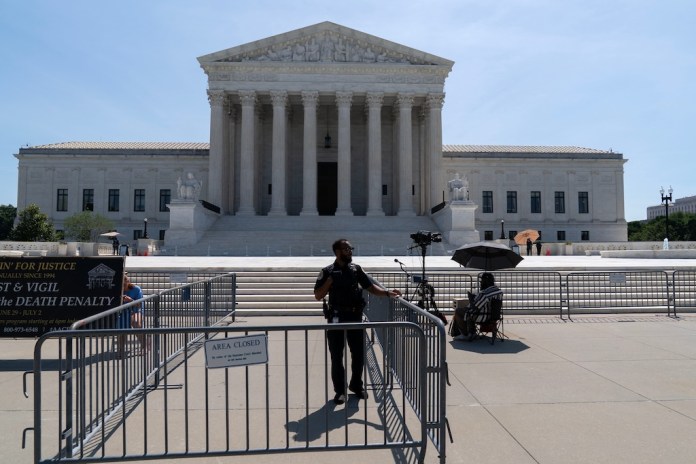
A lot of people on the right are understandably upset about the Supreme Court’s decision this week upholding birthplace citizenship under the 14th Amendment. It’s easy to see why. All one has to do is read the scathing dissents by Justices Samuel Alito and Clarence Thomas, which expose the flawed reasoning and intellectual dishonesty of the 5-4 majority — a majority that was clearly searching for a specific policy outcome and justifying it under the color of the Constitution.
But let me offer a cautious caveat to the black-pilling. The court’s decision wouldn’t be the catastrophe that it is if we hadn’t just lived through a Democrat administration that demonstrated what a dangerous weapon mass illegal immigration can be in the hands of left-wing ideologues who want to remake America.
There is a plausible world in which birthplace citizenship might be sound public policy. But that world is one in which immigration is restricted in ways that it hasn’t been for generations, and the border is sealed in ways it never has been before. In that scenario, granting citizenship to the native-born children of foreign nationals does a lot of the heavy lifting of assimilation. It gives immigrant families a stake in the nation, imposes obligations of service, and invites them to sink deep roots in American soil.
By contrast, under conditions of mass immigration, conferring citizenship on every person born here renders the entire concept of citizenship meaningless and destroys the nation. If anyone can become a citizen simply by accident of their birth in this country, and citizenship is effectively open to everyone in the world, then an “American” is anyone who can manage to get here and start a family.
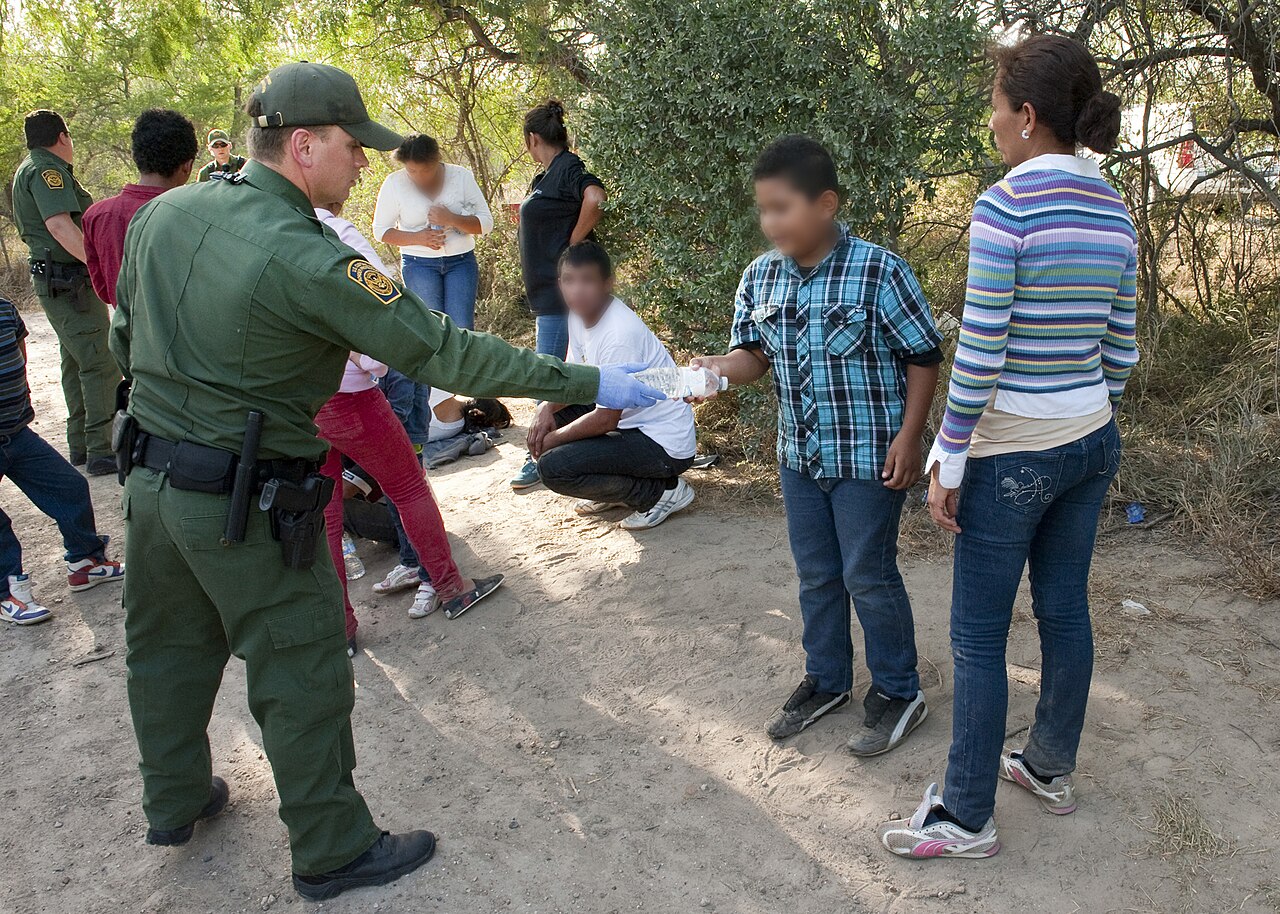
That is what we had under the Biden administration. In the four years from 2021 to 2025, at least 12 million foreign nationals (and possibly as many as 20 million) entered the United States illegally. They knowingly broke our laws and snuck over the border, in most cases after paying cartel-connected smugglers in Mexico. The Biden administration released these people on parole, gave them work permits, and retroactively granted them legal status through bureaucratic legerdemain (TPS or some similar program). Absent mass deportations on a scale we have yet to see from the Trump administration, millions of these people — who demonstrated their unfitness for citizenship by crossing the border illegally and breaking our laws, committing fraud against us all — will remain in our country forever. They will have children here, and their children will be U.S. citizens.
Given this backdrop, it doesn’t take a genius to see the long-term consequences of the Supreme Court’s ruling. If we allow millions of people to enter our country illegally every year, and then grant citizenship to their children, after a decade or so we won’t be the same country. It will completely transform America. Arguably, it already has.
Of course it didn’t have to be this way. Under normal circumstances — a controlled border, no mass illegal (or legal) immigration, and competent federal enforcement of our immigration laws — birthplace citizenship actually makes a certain kind of sense.
After all, no self-governing republic can survive with large pockets of permanently domiciled noncitizens. When you allow people into your country permanently, but do not offer them or their offspring citizenship, what you end up with is what Europe has now: multiple generations of unassimilated communities of foreigners, taking over the country block by block, town by town. They have no real stake in the political life of the nation because they lack the rights and responsibilities that come with citizenship, and their children are raised in what amounts to a nation-within-a-nation. They become, in short, a fifth column. And in time, an occupying force.
In countries like France and Britain, which have large numbers of Muslim migrants, this means multigenerational communities of non-citizens with a totally different cultural and political worldview — one that’s openly hostile to the host country. They will eventually, as they are beginning to do now, carve out their own insular polities within the nation, Balkanizing the country and destroying the possibility of republican self-government or even the possibility of national survival. An Islamified Britain will no longer be Britain, but something else.
For a long time, America was able to avoid this fate, thanks partly to our geography and partly to the limits and controls we placed on immigration. While it might not have been the intent of the drafters of the 14th Amendment to confer citizenship on all those born here, the effects of birthplace citizenship were not disastrous. We were able to absorb and assimilate foreign families, most of whom hailed from Europe, and within one or two generations there wasn’t much difference between the children of recent European immigrants and the children of native-born Americans.
But from 1965 onward, after our immigration regime changed to one based on family reunification, and immigration shifted from Europe to Asia and South America, everything changed. Mass immigration, coupled with the cultural dissimilarity of the sending countries, transformed birthplace citizenship from a lever of assimilation to a wrecking ball of national identity and culture. And now that the Supreme Court has decided, against the overwhelming weight of historical evidence, that the 14th Amendment means granting citizenship to the children of foreign nationals born in the U.S., the stage is set for a complete transformation of our country.
Because eventually, a Democrat administration will once again occupy the White House. And when that happens, millions of illegal immigrants from every corner of the globe will pour across our southern border, most of them to remain forever. Their children, thanks to the Supreme Court, will become U.S. citizens but remain unassimilated, living in discrete ethnic communities with loyalties and allegiances to their families’ nations of origin.
By the time it’s obvious and undeniable what a profound mistake it was to combine mass immigration with birthplace citizenship, it will be too late. America as a nation and a republic will be finished. We’ll be something else entirely: a Balkanized, polyglot empire peopled not by self-governing citizens, but by subjects.
John Daniel Davidson is a senior editor at The Federalist. His writing has appeared in the Wall Street Journal, the Claremont Review of Books, The New York Post, and elsewhere. He is the author of Pagan America: the Decline of Christianity and the Dark Age to Come. Follow him on Twitter, @johnddavidson.
" Conservative News Daily does not always share or support the views and opinions expressed here; they are just those of the writer."
*As an Amazon Associate I earn from qualifying purchases