Bessent handling Iran war’s economic pressure well: Tiana Lowe Doescher
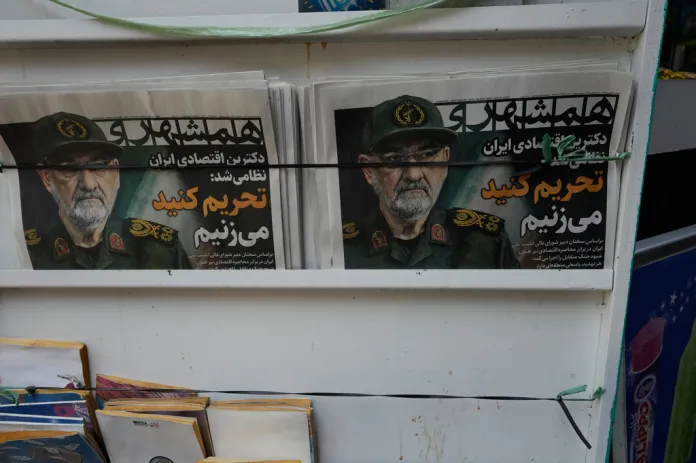
Washington Examiner columnist Tiana Lowe Doescher praised Treasury Secretary Scott Bessent for his effectiveness in applying economic pressure on Iran. she described Bessent as highly capable and influential, emphasizing his role in imposing secondary sanctions targeting Iran’s digital assets, technology, gold, aviation, and shipping, as well as nearly 60 individuals and entities involved in circumventing sanctions. Thes measures aim to weaken Iran’s economy by restricting its revenue sources, particularly oil exports. Doescher highlighted that these sanctions are also designed to pressure Iran’s allies, especially China, which continues to purchase Iranian oil. She believes that reducing Iran’s financial capabilities could lead to the regime’s decline and erode its control over key strategic areas like the Strait of Hormuz. Despite preparations for “economic D-Day,” she notes that the U.S. has been gradually limiting iran’s financial and shipping activities, making the regime increasingly vulnerable if its oil exports fail to generate revenue.
Washington Examiner economics columnist Tiana Lowe Doescher on Monday praised Treasury Secretary Scott Bessent, who appears to be the new face of economic pressure placed on Iran.
“Bessent is indeed the best-equipped person to handle this. Not only because, in my estimation, Bessent is the most consequential treasury secretary in some time, probably the single most effective actor in the administration, and probably given the hardest roster,” Doescher said on One America News’s Fine Print.
Recommended Stories
Bessent unveiled secondary sanctions against Iran and foreign countries financially assisting the nation on Monday; however, the overall message anticipated as an “economic D-Day” came more as a warning.
The new sanctions target Iran’s “digital assets, technology, gold, aviation, and shipping,” and name nearly 60 individuals, entities, and vessels accused of propping up Iran’s war machine through illicit commerce and sanctions evasion.
“These aren’t sanctions on Iran; these are sanctions on our supposed allies and partners that still do business with Iran,” Doescher said.
“Rather than just using brute force targeting Iran directly, that’s great and important, tariffing a country to secure a better trade deal, that’s fine. But really all of Trump’s strategy about ‘America First’ should be about forcing our allies to do what we want, and that means isolating Iran economically,” she continued.
Doescher noted the secondary sanctions predominantly target China and that they will be the “real stress test” to determine how much the Trump administration will go after China, so long as it continues to purchase Iranian oil for its “teapot refineries.”
Doescher also argued that cutting off Iran financially would result in the decline of the Iranian regime and its economy.
TRUMP HOLDS OFF ON TOUGHEST IRAN SANCTIONS DESPITE ‘ECONOMIC D-DAY’ BILLING, EXPERTS SAY
“You can make Iran’s control of the Strait of Hormuz meaningless. For one thing, the U.S. is succeeding, very slowly, but gradually and significantly opening up the Strait of Hormuz. More of our ships and more of our allies’ ships are beginning to make it through the strait,” she said.
“However, if you are making it so that way Iran is financially cut off, that their exports don’t mean anything, it doesn’t matter if they don’t hold onto the Strait of Hormuz,” she said. “If they’re not bringing in any revenue, and oil is their only revenue, they aren’t exporting finance, culture, any other real goods like that, if they can’t find actual buyers for their oil, that is probably the end of the regime.”
Christian Datoc contributed to this report.
" Conservative News Daily does not always share or support the views and opinions expressed here; they are just those of the writer."
*As an Amazon Associate I earn from qualifying purchases