Argentina Players Face Stiff Punishment for Displaying Political Banner After Defeating England at World Cup
A recent football match saw Argentina come from behind to defeat England 2-1 in the semifinals, earning their spot in the World Cup final against Spain. During celebrations, some argentine players displayed a political banner referencing the Falkland Islands dispute, which led to international controversy due to FIFA’s rules banning political slogans. The Falkland Islands, close to Argentina and historically contested wiht Britain-whose forces repelled Argentine invasions in 1833 and 1982-are a sensitive national issue for Argentina. The display angered UK officials,who called the act inappropriate and supported FIFA investigations,highlighting the ongoing territorial dispute. The match itself featured notable moments, including goals from Lionel messi, culminating in Lautaro Martínez scoring in stoppage time to secure the victory.
A thrilling victory gave way to a politicized celebration that could prove costly.
On Wednesday, Argentina came from behind late to defeat England, 2-1, and advance to Sunday’s World Cup final.
Afterward, according to ESPN, some Argentine players celebrated with a banner that read “Las Malvinas son Argentinas,” which translates to “The Falkland Islands are Argentinian” — a reference to a longstanding territorial dispute that could have consequences for the players involved or for the Argentine squad as a whole.
“Equipment must not have any political, religious or personal slogans, statements or images. Players must not reveal undergarments that show political, religious, personal slogans, statements or images, or advertising other than the manufacturer’s logo,” the International Football Association Board’s rulebook reads.
Moreover, that rulebook allows for punishment by FIFA, which oversees the World Cup.
“For any offence the player and/or the team will be sanctioned by the competition organiser, national football association or by FIFA,” the rulebook reads.
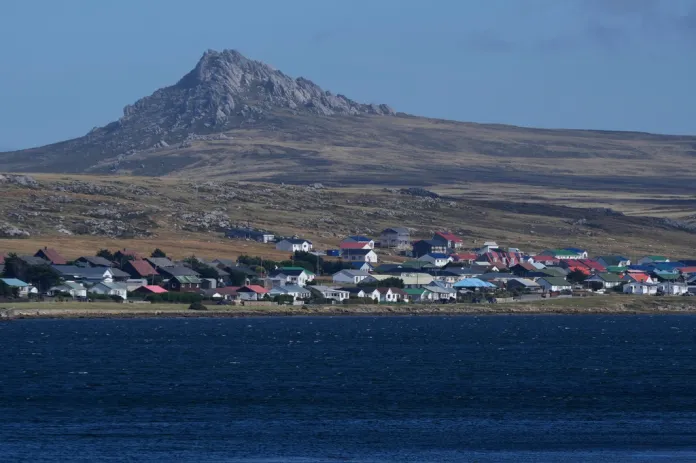
The Argentine players, of course, did not choose that moment at random. After all, for nearly two centuries, Argentina has quarreled with Britain over control of the Falkland Islands.
“The Falkland Islands have never had any native inhabitants and no indigenous people have ever been displaced, instead the Islands were entirely unoccupied until 1765, when they were first claimed by the British who established a garrison at Port Egmont,” the Falkland Islands Government website reads.
Then, in 1833 and again in 1982, British forces repelled Argentine invaders. The 19th-century conflict resulted in no fatalities, but the 1982 Falklands War cost nearly 1,000 Argentine, British, and Falkland Islanders’ lives.
One could scarcely exaggerate the role of the Falkland Islands in shaping Argentine national pride. After all, those islands lie only 300 miles from the Argentine mainland.
In fact, the Falklands War Memorial, located in the Argentine capital of Buenos Aires, sits directly across from the Torre Monumental, a clock tower gifted to the city by its British community and constructed in 1916, the 100-year anniversary of Argentine independence from Spain. Argentinians deliberately placed the war memorial across from the British clock tower as a reminder of their centuries-old territorial dispute.
Thus, the post-match political celebration rankled officials in the United Kingdom.
“The World Cup might not be ours, but the Falkland Islands definitely are,” a representative for outgoing Prime Minister Keir Starmer said Thursday, per ESPN. “Self-determination rests with the islanders and our commitment to the Falklands will never waver.”
The representative also said that Starmer supported a FIFA investigation.
Likewise, U.K. Business Secretary Peter Kyle called the Argentine players’ celebration “entirely inappropriate.”
“As is standard procedure, FIFA’s independent Disciplinary Committee is currently assessing the match reports and considering the relevant circumstances before deciding on potential further steps based on the FIFA Disciplinary Code,” FIFA said in a statement to ESPN.
Fines for transgressions of this kind can go as high as $20,000.
The banner controversy marred an otherwise epic semifinal match.
In the 85th minute, Argentine soccer legend Lionel Messi set up midfielder Enzo Fernández for the tying goal.
GOOOOAAL! ENZO FERNÁNDEZ DRAWS ARGENTINA LEVEL WITH ENGLAND IN THE SEMIFINALS 🇦🇷 pic.twitter.com/A84NfiCmWH
— FOX Sports (@FOXSports) July 15, 2026
Then, in stoppage time, striker Lautaro Martínez headed in a crosser from Messi to give Argentina the lead, 2-1.
LIONEL MESSI TO LAUTARO MARTINEZ TO GIVE ARGENTINA THE LEAD IN STOPPAGE TIME 🇦🇷
IT’S ABSOLUTELY REMARKABLE 😱
England is now +800 to qualify.pic.twitter.com/SPvuTx6RNS
— FanDuel Sportsbook (@FDSportsbook) July 15, 2026
Argentina will play Spain, its former colonial master, in Sunday’s World Cup final.
Advertise with The Western Journal and reach millions of highly engaged readers, while supporting our work. Advertise Today.
" Conservative News Daily does not always share or support the views and opinions expressed here; they are just those of the writer."
*As an Amazon Associate I earn from qualifying purchases