Alito warns late-arriving ballot ruling may undermine election confidence
Justice Samuel Alito sharply dissented from the Supreme Court’s 5-4 decision to uphold a Mississippi law that permits the counting of late-arriving mail ballots, which are postmarked by Election Day but arrive afterward. Alito warned that this ruling could undermine public confidence in elections and the integrity of the electoral process. He argued that the decision disregards statutory text, historical practices, and legal precedent, potentially leading to questions about voter fraud and the legitimacy of ballots. Alito also raised concerns about the possibility of eliminating ballot receipt deadlines and allowing late ballots to be counted under dubious circumstances, such as ballots being recalled mid-transit or cast by a helpful third party. The dissenters, including Justices alito, Gorsuch, and Thomas, believe the majority’s ruling threatens election security and the trust of the American public. Critics like election integrity advocates expressed disappointment, emphasizing that federal law mandates ballots be received by Election Day. The ruling coincided with other meaningful decisions, including those expanding presidential powers over independent agencies.the high court’s current term is nearing its end with rulings pending on issues such as campaign finance, sports regulations, and birthright citizenship.
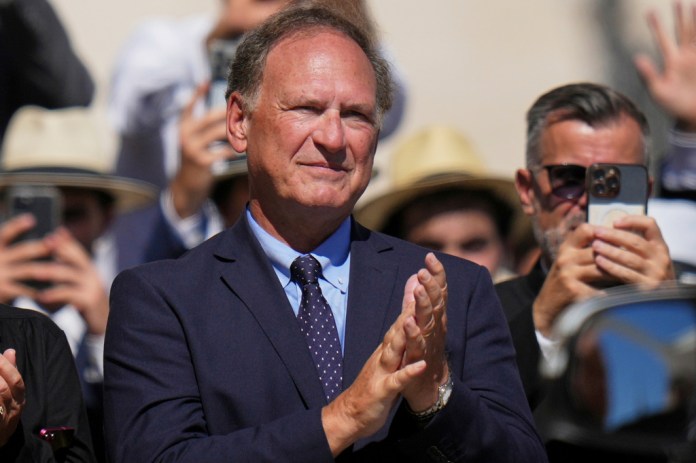
Justice Samuel Alito offered a sharp dissent on Monday to the Supreme Court’s decision to uphold a Mississippi law allowing late-arriving mail ballots to be counted, warning that the majority’s ruling will likely hurt public confidence in elections and the system of government.
The high court ruled 5-4 in favor of upholding the Mississippi law, finding that federal law does not preempt state laws allowing the counting of ballots that are postmarked by Election Day but arrive days later. Alito penned the dissent and highlighted how that decision could undermine upcoming elections.
Recommended Stories
“Not only is today’s decision inconsistent with statutory text, legal context, historical practice, and precedent; it also threatens to produce lamentable consequences,” Alito wrote. “The majority’s holding spawns a slurry of troubling election-law questions and risks further undermining Americans’ confidence in election integrity.”
Alito questioned if states could “eliminate ballot-receipt deadlines entirely” because of the majority’s finding that the law establishing Election Day only requires a voter’s decision to be made that day, not that the ballot must be turned in by that day. He also questioned whether states could allow late ballots to be counted even if they are turned in late by a “helpful neighbor” or an Uber driver, or if something other than a postmark could be used to verify that the ballot was cast by Election Day. Alito’s other hypothetical went into whether a ballot would still count if a voter decided to recall it.
“But the Postal Service allows its customers to recall mail mid-transit, as do many private parcel services,” Alito wrote. “Given that fact, is a voter’s ‘selection’ truly ‘final’ when he or she puts a ballot in the mailbox? The majority dodges this question, offering the passing suggestion that Mississippi’s statute would be preempted only insofar as it allows voters to recall their ballots.”
Alito also stated that the majority’s decision “leaves open opportunities for voter fraud that may further undermine Americans’ faith in the integrity of this country’s elections.”
“It is undeniable that a prohibition on counting late-arriving ballots would provide an additional hurdle for bad actors seeking to stuff ballot boxes when early election results suggest a tight race,” Alito wrote. “The majority incorrectly removes this safeguard from federal law.”
Election integrity advocates, such as Jason Snead, executive director of Honest Elections Project, were disappointed at the majority’s ruling. Snead called the high court’s Monday ruling a “deeply disappointing” decision that “misses the mark.”
“Federal law is clear: all ballots must be received by Election Day to be counted,” Snead said. “The Court missed a major opportunity to reinforce election integrity and instead sides with California-style chaos.”
“As Justice Alito makes clear in his dissent, watching ballots trickle in after Election Day and flip races does nothing but damage public trust in our system of government,” he said.
Hans von Spakovsky, a former Federal Election Commissioner and senior legal fellow at Advancing American Freedom, called the decision a “grave disappointment,” also pointing to Alito’s dissent, which warned of the ruling hurting confidence in elections.
“By allowing ballots to be received and counted after Election Day, the Court is thwarting these federal laws and allowing the very chaos and suspicions Congress intended to prevent,” von Spakovsky said. “As Justice Samuel Alito says in his dissent, joined by three other justices, not only is Justice Amy Comey Barrett’s opinion inconsistent with the plain text of those laws and historical practice and precedents, it ‘risks further undermining Americans’ confidence in election integrity.”
SUPREME COURT UPHOLDS MISSISSIPPI LAW COUNTING LATE-ARRIVING MAIL BALLOTS
The Supreme Court’s ruling in Watson v. RNC came on the penultimate day of the high court’s current term, alongside rulings giving President Donald Trump broad firing ability within the executive branch – except regarding the Federal Reserve.
The high court’s current term will conclude on Tuesday, when the Supreme Court issues rulings in cases on campaign finance, bans on biological men in women’s sports, and the president’s birthright citizenship executive order.
" Conservative News Daily does not always share or support the views and opinions expressed here; they are just those of the writer."
*As an Amazon Associate I earn from qualifying purchases