Alan Greenspan dies at age 100
Alan Greenspan, teh renowned 13th chair of the Federal Reserve who served under four U.S. presidents, passed away at age 100 due to complications from Parkinson’s Disease. He was celebrated for influencing the U.S. economy over several decades, overseeing a lengthy economic expansion and promoting free-market principles. Greenspan’s tenure began in 1987 under president Reagan and continued through administrations of Bush, Clinton, and Bush W., serving nearly 19 years.
His policies emphasized low inflation and price stability, contributing to the period known as the “Great Moderation,” characterized by reduced volatility in growth and inflation without harming employment. Though, his expansionary monetary approach, dubbed the “Greenspan put,” faced criticism for contributing to the dot-com bubble burst and the 2008 financial crisis, with Greenspan himself acknowledging flaws in his thinking during congressional hearings.
Apart from his federal service, Greenspan led his own consulting firm, Townsend-greenspan & Co., and served as chair of the council of Economic Advisers under President Ford. A talented musician with a background in clarinet and jazz, he studied at NYU and briefly at Columbia. He had close ties with Ayn Rand, advocating Objectivism, and authored ten books. Greenspan received numerous prestigious awards, including the Presidential Medal of Freedom in 2005 and honors from France and the UK. His legacy includes both his influential economic policies and his personal contributions and interests.
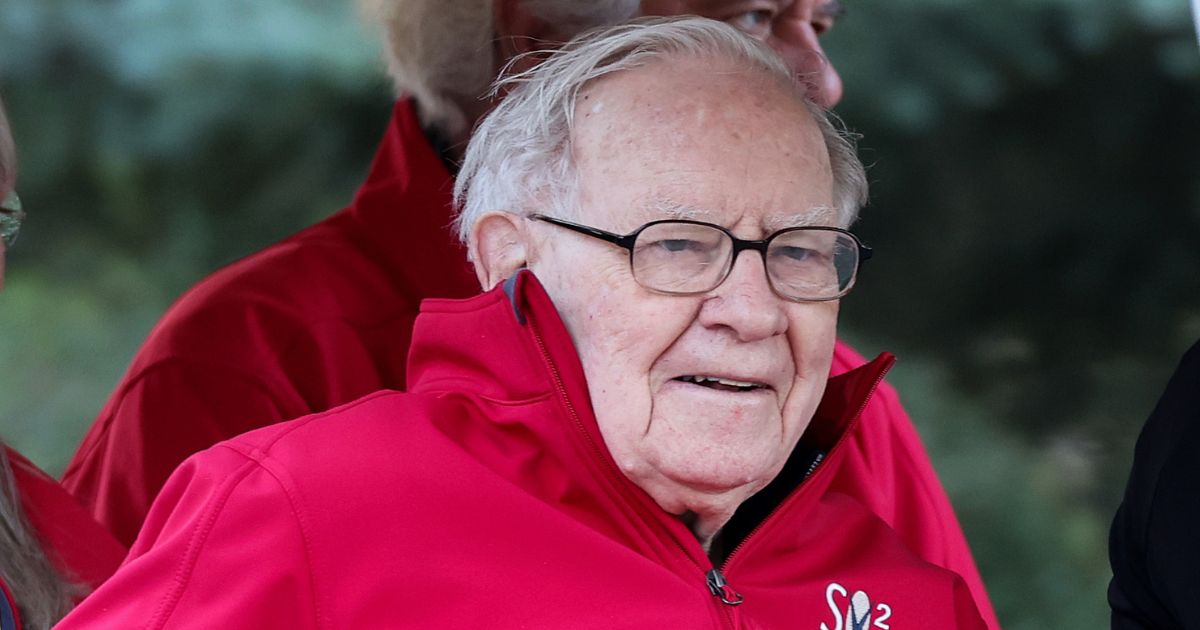
Alan Greenspan, the thirteenth chair of the Federal Reserve who served under four presidents, died at age 100.
“Alan passed away at our home this morning at the age of 100 from complications of Parkinson’s Disease,” Andrea Mitchell, Greenspan’s wife chief Washington correspondent for NBC said in a statement.
Recommended Stories
“He was a giant of a man who helped shape the U.S. economy for decades under presidents of both parties, but was always honest in acknowledging his mistakes,” she said.“To me he was my husband, who shaped my life from our very first date in 1984. He had ‘irrational exuberance’ for baseball, the Washington Commanders, tennis, golf and music, especially jazz,” Mitchell added. “He will be remembered for his brilliance and his kindness. Being his life partner was the joy of my life.”
Greenspan is known for presiding over one of the longest economic expansions in U.S. history. He represented the establishment of a form of free-market economics in government.
After being nominated by President Ronald Reagan in 1987 as chairman of the Board of Governors of the Federal Reserve, he was appointed again by presidents George H.W. Bush, Bill Clinton, and George W. Bush. Greenspan was notably reappointed by Clinton despite criticism from the Democratic party due to his free-market beliefs. He served in the Fed for almost 19 years until his final term ended in 2006. His ideas of keeping inflation low and establishing price stability helped create the foundation for the “Great Moderation.” It was during this time there was a decline in volatility both in GDP growth and inflation. This was done without compromising economic growth or unemployment.
” data-large-file=”https://cndimages.nyc3.cdn.digitaloceanspaces.com/breaking-news/wp-content/uploads//2026/06/localimages/AP24332627453388.jpg?w=696″ “https:>
However, Greenspan was criticized for his expansionary monetary policy, known as the “Greenspan put,” which is believed by many to have caused the bursting of the dot-com bubble and paved a way for the 2008 financial crisis. In front of Congress in 2008, he admitted he “found a flaw” in his thinking and it “distressed” him. Congress suggested he could have prevented the mortgage crisis, to which Greenspan defended his reputation saying, “there’s ‘no evidence’ home prices would collapse” and “no regulator was smart enough to foresee the ‘once-in-a-century credit tsunami.’”
For 32 years, Greenspan was chairman and president of Townsend-Greenspan & Co., Inc., an economics consulting firm in NYC. He additionally served under President Gerald Ford from 1974 to 1977 as chairman of the Council of Economic Advisers. In 1968, he briefly served Richard Nixon as coordinator on domestic policy in the national campaign and served as a member of the Group of Thirty in 1984. After his time with the Fed, he then formed economic consulting firm Greenspan Associates LLC, where he worked as a private adviser and provided consulting for firms.
Born March 6, 1926 in Washington Heights, New York City, Greenspan was an avid musician. He attended George Washington High School and played both clarinet and saxophone, and upon graduation in 1993, studied clarinet at the Juilliard School for a year. He graduated from New York University with a B.A., a M.A., and a Ph.D. in economics. In 2005, he was awarded an honorary Doctor of Commercial Science degree from the same institution. He also studied advanced economics briefly at Columbia University.
Greenspan was also linked with novelist and philosopher Ayn Rand. He was part of Rand’s inner circle, the Ayn Rand Collective and became a proponent of Objectivism. The two remained friends until her death in 1982.
The author of 10 books received the President Medal of Freedom by George W. Bush in 2005, the highest civilian award in the US, and the Department of Defense Medal for Distinguished Public Service. In 2000 he received the highest French merit of Commander of the Legion of Honour and was knighted as Knight Commander of the Order of the British Empire by the UK in 2002.
" Conservative News Daily does not always share or support the views and opinions expressed here; they are just those of the writer."
*As an Amazon Associate I earn from qualifying purchases