Rancher’s Crisis Shows What’s Wrong With The U.S. Beef Market
The article explains how getting “single-source,” carrot-finished beef to customers is difficult in a system dominated by processors and standardized supply chains. It focuses on Justin Pettit of Santa Carota Ranch in California, who feeds rejected, “ugly” carrots from waste streams to cattle to produce a distinctive, grass-fed flavor-an choice to the industry’s usual corn-finished beef.
Pettit argues that protein markets have major barriers to entry because meat processing is controlled by a limited number of companies that sit between ranchers and buyers.Under food-safety rules, those processors can limit differentiation and effectively control what ends up in branded batches, while regulators largely focus on approving labels and contamination checks rather than policing brand integrity or sorting.
Santa Carota initially sold carrot-finished ground beef to a restaurant chain and later expanded to higher-end steaks for fine dining clients. But pettit says the processor suddenly cut orders, eventually claiming it no longer needed product because it already had enough inventory on hand-leading to lost steak orders and a cascading decline.Pettit and the restaurant chain allegedly showed mismatched paperwork: Pettit says the processor’s records suggested the restaurants received far more ground beef than Santa Carota supplied,raising allegations that mixed product was being substituted within “ground beef” batches.
The dispute is described as contested allegations now headed to court, with trial scheduled barring settlement. The processor has not responded to the reporter’s request for comment.
the piece then connects Pettit’s case to broader industry concerns: evidence that burgers can contain meat from many different cows, the incentives that push toward consolidation, and regulatory gaps that don’t reliably enforce product traceability. It discusses proposals like the PRIME Act, which could allow smaller slaughterhouses, but presents Pettit’s view that it’s unlikely to materially change prices or fully fix the bigger market and labeling/tracking problems.
Ultimately, the article portrays Santa Carota’s legal fight as financially and operationally destabilizing, leaving pettit hoping he can return to feeding cattle-arguing that something basic in the country’s food system is broken if innovators can’t realistically bring their products to market.
The meat on your plate has to overcome a long line of barriers to get there, and those barriers limit what you can buy in ways that you might not have noticed. They also mean that your family might be eating mystery meat, sold as something different than the product you think you bought.
If you drive to Justin Pettit’s California ranch, out in the hills on the east side of Bakersfield, you’ll pass truck after truck loaded with carrots. They stop just down the road, at processing plants run by food industry players like Bolthouse Farms.
Chris Bray for The Federalist
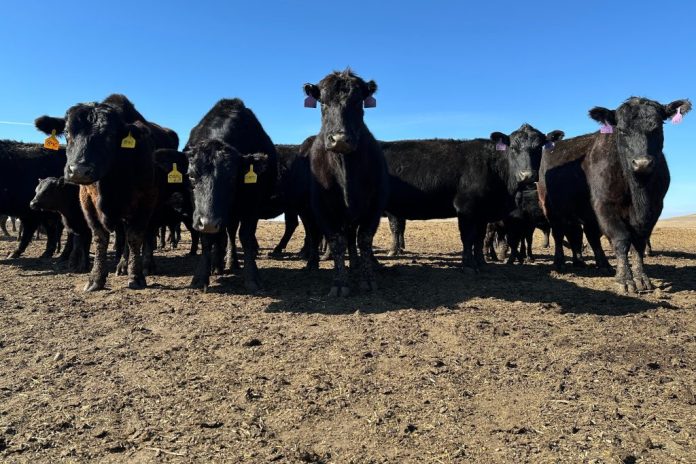
The giant Central Valley carrot processors end up with tons of waste, a mix of trimmings and rejected carrots that are too ugly for the supermarket. Pettit feeds those carrots to cows, finishing grass-fed beef with a sweet and moist crop that changes the flavor of the nutrient-dense meat. Beef cattle are usually finished – fattened for slaughter – with corn. No one else in the world does what Santa Carota Ranch does, giving them a unique product in a market driven by standardization and corporate mass production. And for now, after years of success and then years of crisis, you mostly can’t buy their product.
For Pettit, the story of what happened to Santa Carota is a story about the barriers to entry in protein markets, and the way those barriers limit supply and product differentiation. Entering the market for beef, he told The Federalist, is like “trying to merge into 80 mile-per-hour traffic on your bicycle.”
Pettit began selling carrot-finished ground beef to a California restaurant chain before the pandemic. Food safety regulations effectively limit the number of beef processors, so Santa Carota’s cows had to leave the Central Valley to be slaughtered in the industrial suburbs of Los Angeles. A processor stood between the supplier and the end user, taking orders from the restaurants and telling the rancher how many head of cattle to truck down to the slaughterhouse to meet the weekly demand.
The story that follows is a set of contested allegations, challenged in court by the processor, and it looks like they’re about to be tested in front of a jury. Barring a settlement, trial is scheduled for August. The processor, Sterling Pacific Meat Company, hasn’t responded to a request for comment from The Federalist.
As the restaurant chain consumed a growing amount of ground beef for its burgers, Santa Carota was left with the rest of the cow, the highest-quality cuts that don’t go into the grinder. So they began selling carrot-finished ribeyes and other steaks to the fine dining industry, becoming a supplier to premium buyers like the Wynn hotel in Las Vegas.
Then the orders for ground beef started drying up, Pettit says, or seemed to. The meat processor sent for fewer and fewer cows, and then called Pettit at the end of 2023 to say that they didn’t need any. They already had enough Santa Carota product on hand to address the ongoing demand for ground beef from the restaurants.
The losses cascaded: Fewer cattle being slaughtered for ground beef meant the loss of steaks to sell to the fine dining clients. So those orders started to disappear.
“We couldn’t kill cattle just for ribeye,” Petit told The Federalist, sitting at a table next to the Santa Carota barn. “And if you’re sold out for so long, you’re off the menu. Once you’re on the menu, you’ve got to fight to keep your spot on the menu.”
Finally, at a meeting in suburban Los Angeles with executives at the restaurant chain that bought Santa Carota’s ground beef for burgers, Pettit brought up the sharp decline in the orders. The people at the restaurant chain didn’t know what he was talking about. Pettit says they showed him their purchase orders with the meat processor, which showed that the restaurants had received “way more pounds of ground beef than us at Santa Carota had actually supplied.” The gap between orders appeared to add up to half a million pounds of meat, at what was then a wholesale price averaging $3.40 a pound to the original supplier.
Pettit could only see one possible explanation: “The only conclusion we could come to was that Sterling Pacific was providing product other than ours in the ground beef batches.”
A grower creating a bespoke protein product has no direct control over the way his cows, or any other animal, become meat. The industry is built on the presence of a middleman, the processing companies. A rancher ships cows to the front of the slaughterhouse, and then meat comes out the back. What happens in between is an open question, and Pettit suspects that mixed product is far more common than consumers realize: An order for 10,000 pounds of certified Angus beef might be 7,000 pounds of Angus and 3,000 pounds of whatever.
“I think that’s happening across the board,” Pettit told The Federalist. “I’ve talked to other producers that feel that’s happening to them the same way.”
Federal inspectors from the USDA, assigned as a regular presence in processing facilities, check for food safety. They monitor for contamination. They don’t regularly police brand differentiation and the sorting of product, which is primarily the responsibility of the processing company.
“They get to guard their own henhouse,” Pettit says.
The answer, Pettit told The Federalist, is transparency through better industry practices: tracking, labeling, clear and provable information for consumers.
“There’s a lot of food safety laws, but there’s a lot of loopholes in the labeling,” Pettit says. “And I feel that we have the technology now to run real-time audits. Where DOGE would do the flow of money, we need to be doing the flow of meat. I think that for these larger processors, we need to see how many pounds go into a program, and how many pounds go out.”
You can read the USDA’s current meat labeling standards here. They do allow inspectors to “take appropriate regulatory control action, such as product retention, when they identify misbranded product,” but the current labeling regulations are largely built around labeling choices made by the industry. Federal regulators focus on “approval of labels.”
In recent weeks, another discussion in Congress has centered on a test version of Kentucky Republican Thomas Massie’s PRIME Act, passed by the House recently as part of a larger farm bill and waiting for Senate action. If it passes, this legislation will allow for the creation of a limited number of new, smaller slaughterhouses that can process meat without USDA inspectors on site, relying on state and local health inspections to maintain safe production.
For Pettit, the PRIME Act is interesting, but not a major intervention. It’s not likely to produce serious changes in beef markets or prices. Instead, it promises to open market access to smaller producers, but it won’t be a gamechanger for bigger operations that need a large weekly slaughter to regularly supply restaurant and grocery chains. He compares it to another, older shift in a consumer market: “You’re letting craft beer into the beer market.”
In a famous test, a journalist delivering fast food hamburger patties to a lab for DNA testing found that a single burger could have meat mixed from a hundred or more different cows. Those cows can come from different herds, different sources, even different states and countries, all tossed into the same grinder. Innovators like Justin Pettit propose to grow the market for single-source meat. But we don’t have markets or a regulatory environment that make any of that easy to do.
The current interaction of the market and the regulatory state pushes meat toward bigness, consolidation, and the absence of local control. Big government, big industry. Sample news headline: “How four big companies control the U.S. beef industry.”
Struggling with costly and drawn-out litigation, Santa Carota Ranch is trapped in a moment of decline. They aren’t ordering many carrots, because they aren’t feeding many cattle. Pettit sold his house so he could live on the money while his business is stuck in a holding pattern, and he sold 10,000 acres of land to fund the litigation. His wife and children are in Texas, for now, and he travels back and forth between his family and his ranch. Driving around that ranch this week, through a burn scar from a recent brush fire that brackets his barn, he sighed heavily. “I just wanna go back to feeding cows,” he said.
If he doesn’t get the chance to do that, something in the country is broken.
Justin Pettit recently sat down for a long discussion with the independent journalist Keely Covello, who covers agriculture and water in the American West. You can watch that whole discussion here:
If you’re interested in the meat on your family’s plates, it’s well worth the time.
Chris Bray is a senior correspondent at The Federalist and a former infantry sergeant in the U.S. Army. He has a history PhD from the University of California Los Angeles, not that it did him any good. He also posts on Substack, at “Tell Me How This Ends,” here.
" Conservative News Daily does not always share or support the views and opinions expressed here; they are just those of the writer."
*As an Amazon Associate I earn from qualifying purchases