Who’s turning up for oil rig work in post-Maduro Venezuela?
The article examines the challenges facing oil, gold, and minerals investors in Venezuela after the ouster of Nicolás Maduro, arguing that political uncertainty, decades of underinvestment, rampant organized crime, and a depleted, emigrated workforce make large-scale revival tough. Companies would face broken legal and commercial frameworks that industry leaders say are currently “uninvestable,” and significant infrastructure rebuilding and training would be required. Chevron—having stayed through earlier sanctions—may be better positioned then other majors, while smaller operators could succeed if experienced local engineers return. The minerals and gold sectors are especially chaotic, with armed gangs, narco-traffickers, and foreign actors complicating ownership and security; some experts suggest centralizing concessions under state control as a long-term fix. U.S. policy and whom Washington chooses to back will be decisive for stability and investor confidence, and many Venezuelans fear any transactional approach. the piece concludes that meaningful investment will likely be gradual and contingent on durable political stability, improved rule of law, and secure supply chains.
Who’s turning up for oil rig work in post-Maduro Venezuela?
A long history of underinvestment, extreme political risk, and organized crime. These are just some of the issues that U.S. oil and minerals companies might face if they were to set foot into Venezuela now that there appears to be a ray of light following the removal of the country’s dictator, Nicolas Maduro.
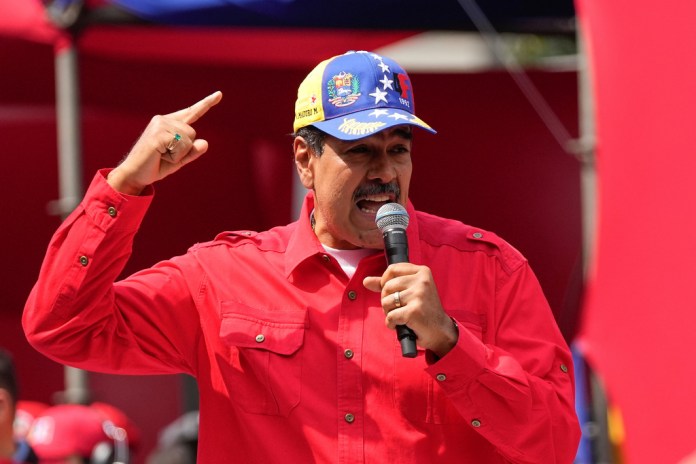
The longtime strongman, ousted by President Donald Trump’s administration on Jan. 3, has almost unanimously been seen as a block on improving societal conditions in the South American country. On top of all those, however, there is the matter of just who exactly would be able to operate any revitalized oil or minerals industries in a country blessed with natural resources that have largely been squandered for the benefit of a few elites.
Millions of Venezuelans have left the country in recent years against a backdrop of economic collapse, food shortages, and increasing crime, many of those highly educated and precisely the people U.S. companies might need to help run any local operations.
While the dynamics of the oil, gold, and minerals industries may be different, the problem of an untrained workforce on the ground, too, would be a major stumbling block for companies looking to invest there.
“A lot of people have left, and there isn’t a very well-trained population,” said Luciano Duque, a Venezuelan and chief investment officer at Florida-based investment group C3 Bullion.
Duque has been out of his home country for 27 years.
“The infrastructure needs to be built, but you also have to train people, and that will require a lot of investment,” he said. “On top of that, there is a mentality issue with people used to depending on government programs.”
One alternative could be getting Americans to relocate to Venezuela to make up for the worker shortfall. But that possible solution is not at all clear at this stage, especially as the political situation remains so unsure.
Chevron, the only oil major to have stayed in Venezuela since sanctions were imposed by the late president Hugo Chavez in 2007, may be more easily placed to widen its operations. Yet it would be a tough ask for those who would either be stepping back into the country or entering it for the first time. Exxon Mobil CEO Darren Woods said as much at a Jan. 9 White House meeting with other oil executives and Trump.
“If we look at the legal and commercial constructs, frameworks, in place today in Venezuela, today it’s uninvestable,” Woods said. “And so significant changes have to be made to those commercial frameworks, the legal system, there has to be durable investment protections, and there has to be a change to the hydrocarbon laws in the country.”
Acting Venezuelan President Delcy Rodriguez has announced some oil industry reforms in an attempt to encourage foreign investment.
While the major oil companies may struggle amid shareholder concern over instability and risk, smaller operators may be nimble enough to succeed, so long as experienced oil engineers who may have left Venezuela decide to return.
“For a smaller operator, the ability to hire Venezuelan engineers who are familiar with the fields, the refineries, and the country is a huge advantage,” said Andrejka Bernatova, founder and CEO at NASDAQ-traded energy solutions company Dynamix. “You are not trying to run everything with foreign staff who do not understand the system.”
Regaining the Midas touch
The minerals industry is, in some ways, a different beast from the oil sector, with rampant corruption, confusion over who actually operates mining assets, and high levels of organized crime, to name a few issues. The sector is largely a free-for-all with heavy Chinese, Russian, and Iranian presence mixing with armed gangs and narco-traffickers, sources say.
“The gold industry is where it goes crazy,” said Pedro Rojas Arroyo, an exiled Venezuelan who is the CEO of Vivy Tech, a Boston-based technology solutions company. “There is the biggest mafia involved there, and it is highly dangerous — I’d liken it to Mexican cartels.”
What might help with that is a move toward putting such mineral concessions under one roof in a similar move to what the Venezuelan government did in the late 1970s with its oil industry, funneling basically all asset ownership under the state-owned company PDVSA. It could be a staged process with the country’s government gradually taking control of the assets and putting any mined gold, for example, into vaults. Not an easy task, and definitely one for the long term, especially as it isn’t clear yet who is in control of the government.
“It is a mess out there,” Duque said. “The Venezuelan government will need to know who owns what. You may not need as much infrastructure investment as the oil industry, but the problem is the backing of the government and the different factions within it.”
And therein lies the main problem. Who exactly will be in political charge of Venezuela not only in the shorter but also the longer term?
There can really be no large-scale investment in the oil or mineral sectors until there is some kind of political stability, something that could be two years away or more, and that’s thinking optimistically, Rojas Arroyo said.
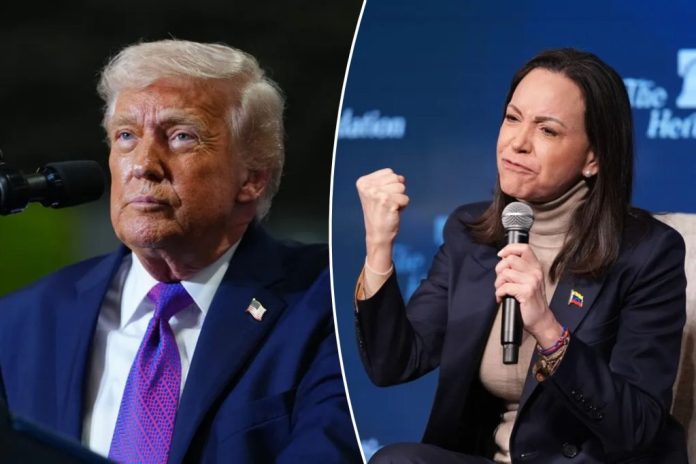
Trump is going to have to work out who to side with in the country, and current politicians tied to the Maduro regime will not be the answer, he said. Trump, for example, has welcomed Nobel Peace Prize winner Maria Corina Machado to the White House after previously disparaging her, saying she was not qualified to lead the country. Trump seemed to lean more toward people associated with the old regime, such as Rodriguez. Around the same time as Machado’s visit, CIA Director John Ratcliffe met in Caracas with Rodriguez, reportedly at Trump’s direction.
While he himself aims to go back to his home country next month, Rojas Arroyo also realizes many exiled Venezuelans will be far more reluctant.
“It will only be when the country is stable, and much will depend on the route taken,” he said. “There is going to be a lot of social commotion.”
They do things differently there
Until there is any semblance of stability, little hope exists that American companies and personnel would even begin to understand the dynamics at play in Venezuela. And even then, it will be very tough, said Fergus Hodgson, director of Colorado-based consultancy Econ Americas and the author of The Latin America Red Pill, a study of the unique challenges of investing on the continent.
“My biggest concern would be organized crime, not just because of its presence but because of the difficult time U.S. firms will have with comprehending it,” he said. Such dynamics, he says, “defy Western sensibilities.” “Few places are more crime-ridden than Venezuela, and you cannot flick a switch to turn that off.”
It looks, at best, therefore, to be a very gradual process with so many factors at play.
Companies and operators who manage to secure stable supply chains may be the ones who come out of it all on top, eventually.
“Markets reward predictable, secure supply,” said Derek Lemke, senior vice president of product level intelligence at AI supply chain company Exiger. “Without visibility and risk control across the full supply chain, resource potential remains theoretical.”
U.S. companies could invest in narrow and heavily de-risked ventures with escrowed revenues or enter into quick projects with guaranteed arrangements. But there will be no stampede into the country, added Usha Haley, chairwoman in international business at Wichita State University.
“Venezuela just seems highly unstable on so many fronts,” she concluded.
Uncertainty will reign for some time, particularly in the current crime-ridden minerals industry.
“Venezuela’s mining code, currency exchange laws, tax laws, and federal and local government free carries make current development uneconomic,” warned Thomas Winmill, portfolio manager at investment group Midas Funds.
At the heart of it all will be any semblance of political stability. And Trump and the United States will play a key role in that. Many Venezuelans remain at present highly skeptical.
‘LOYAL SOLDIER’: A DAY ON THE TRAIL WITH JD VANCE, TRUMP’S ‘HUMAN SWISS ARMY KNIFE’
They may be delighted to see the back of Maduro, but any U.S. involvement has to be so much more than seeking to make a quick buck from the country’s assets, something that has not looked very hopeful, judging by events so far.
“I am disappointed in the U.S. so far, given it has broken all democratic rules by negotiating with the current government,” Rojas Arroyo said. “It cannot just be transactional — we are leaderless right now.”
Nick Thomas is a writer based in Denver.
" Conservative News Daily does not always share or support the views and opinions expressed here; they are just those of the writer."
*As an Amazon Associate I earn from qualifying purchases