What a Netflix-WBD merger would mean for movie theaters
The article discusses the implications of Netflix’s announced plan to acquire Warner Bros. Discovery (WBD) and its potential impact on movie theaters. Film exhibitors and industry groups have expressed concern as Netflix’s business model traditionally involves limited theatrical releases, primarily to qualify for awards, rather than robust, wide theatrical distribution. Cinema United’s CEO, Michael O’Leary, criticized Netflix’s short theatrical windows as insufficient for supporting customary movie theaters.
Netflix co-CEO Ted Sarandos has tried to reassure that the company will maintain theatrical releases but suggested shorter exclusive windows, which some see as a challenge to the theatrical business model. Sarandos has previously called the traditional theatrical distribution “outdated” and implied that simultaneous streaming and theater releases could reach audiences just as well.
Film experts worry that the merger could reduce competition, decrease film production variety, and threaten the survival of movie theaters, which are already struggling after the COVID-19 pandemic. however, Stephen Galloway, dean of Chapman University’s film school, offers a more optimistic view, suggesting the merger could benefit Netflix by providing a theatrical outlet and gaining a vast library of films, while paramount Skydance’s competing bid also promises increased theatrical releases.
Paramount Skydance has launched a hostile bid against Netflix,offering more cash and pledging to release over 30 films per year theatrically. Both Netflix and Paramount Skydance see strategic value in acquiring WBD for growth in streaming and theatrical markets. The bidding war and potential merger are under scrutiny for antitrust concerns, and the WBD board is currently reviewing offers before making a proposal to shareholders.
What a Netflix-WBD merger would mean for movie theaters
Since Netflix announced its plan to buy Warner Bros. Discovery this month, film exhibitors have expressed consternation and worry as to what the pending merger would mean for the theatrical business if the world’s leading streaming service acquired one of Hollywood’s oldest studios.
Shortly after the announcement, one of the largest exhibition trade groups came out in full force against the deal because Netflix’s business model does not include wide theatrical releases.
“A true commitment to theatrical means a robust slate of movies with a meaningful period of theatrical exclusivity supported by marketing,” Cinema United President and CEO Michael O’Leary said in a statement. “Sporadic and truncated theatrical releases to meet awards criteria in a handful of theatres is not a commitment to exhibition.”
His comments refer to Netflix’s limited theatrical windows that generally last at least two weeks, the amount of time needed to qualify for eligibility in the Best Picture category at the Oscars. In the case of Wake Up Dead Man: A Knives Out Mystery, the whodunit sequel was played in select theaters for 14 days before it went to streaming on Friday.
In an effort to assuage the concerns of exhibitors, Netflix co-CEO Ted Sarandos assured that the company will maintain WBD’s theatrical distribution but suggested that the exclusive theatrical windows will likely be shortened because they are not “consumer-friendly.” He also denied that Netflix is opposed to playing movies in theaters, but some of his past comments show his indifference to the theatrical side of the business.
Earlier this year, Sarandos called the theatrical model an “outdated concept.” And in 2024, he opined that the simultaneous release of Barbie and Oppenheimer the summer before “would have enjoyed just as big an audience on Netflix” as they did in theaters.
One expert with ties to the entertainment industry finds possible consolidation in the case of WBD particularly troubling as it relates to the future of movie theaters.
“Lowering competition among film giants will reduce the number of films made, the number of employees working on those films, and perhaps the diversity in the kinds of films that will be made,” American University film and media arts professor Larry Engel told the Washington Examiner.
Engel, who is a member of the Directors Guild of America and the Writers Guild of America East, is deeply concerned about the sustainability of the theatrical experience, regardless of whether the victorious bidder turns out to be Netflix or Paramount Skydance.
“Theaters are an endangered species, and consolidation would likely threaten that species further and move theatrical distribution closer to the brink of extinction,” he said. “How long that will be, I don’t know.”
Movie theaters are still reeling from the COVID-19 pandemic, which puts them at a disadvantage ahead of a big Hollywood merger. Roughly 39,000 movie screens remain in the United States, down from about 41,000 screens in 2019.
Another professor argues that the number of theaters needs to be reduced if the industry is going to survive, and he believes a merger of this size will bring about more movies to existing theaters that attract audiences.
Stephen Galloway, dean of Chapman University’s Dodge College of Film and Media Arts, presented a more optimistic view of the acquisition.
In the case of Netflix, he said, the merger gives the streaming service a “glorious out from this rigid strategy” of having no theatrical releases for quite some time.
“If it’s Netflix, it gives them an avenue for theatrical releases,” he told the Washington Examiner. “And if it’s Paramount, I suspect that it’s actually better to have your eggs in two baskets instead of one in terms of production — to have two sets of people develop your release of theatrical films, as opposed to everything being decided by one person” or one dedicated film studio.
Both Netflix and Paramount Skydance, Galloway said, have a “very strong motivation” to acquire WBD. Netflix would benefit greatly because it would gain an ”amazing library” of older films and television shows, he explains. On the other hand, Paramount Skydance would get to really compete as a streamer if it gained access to WBD’s portfolio.
Paramount+ has nearly 80 million subscribers, compared to Netflix’s roughly 300 million. HBO Max has about 128 million subscribers. Netflix’s dominance in the streaming market is why it is anticipated to face intense scrutiny by federal regulators on antitrust grounds.
Responding to exhibitors and other critics who are more pessimistic about the Netflix-WBD deal, Galloway said the situation could be much worse.
“All of them are forgetting the alternative, which is that Warner Bros. dies,” he said. “That’s far worse than having it in the hands of people who truly believe in entertainment and movies and great television,” he said of Netflix’s Sarandos and Paramount Skydance CEO David Ellison. “You have potential buyers who actually believe in what they’re buying, and that’s huge.”
While he knows Sarandos personally but not Ellison, Galloway said he feels confident that WBD will be left in good hands, regardless of who wins, because both executives love the business.
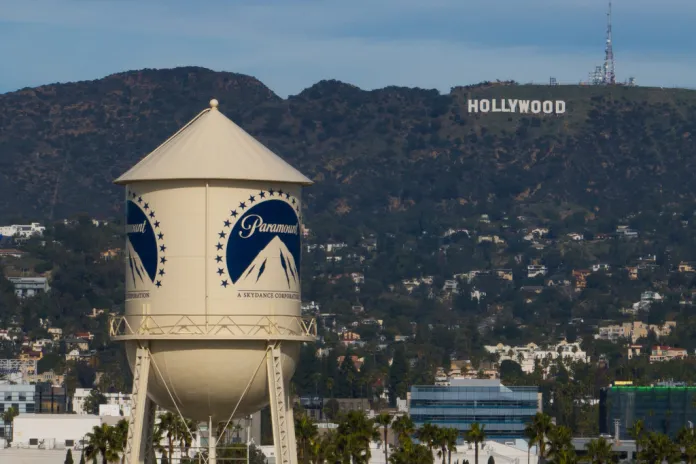
Days after Netflix announced its deal with WBD, Paramount Skydance launched a hostile bid to compete with Netflix’s offer. In doing so, the company cast itself as the better option to preserve theatrical distribution with a plan to release more than 30 films per year if it combines with WBD.
“Paramount is committed to growing the film and TV output of both businesses, including a theatrical slate of 30 plus theatrical releases per year,” Ellison said. “We’re going to satisfy the needs of the moviegoing public.”
Sarandos has said Netflix released about 30 films in theaters this year, although many of those runs were relatively short compared to those of longtime theatrical distributors. Netflix is said to be pursuing a 17-day exclusive theatrical window instead of the traditional 45-day window.
Regarding the bidding war, Paramount Skydance is offering $108.4 billion entirely in cash for WBD to overtake Netflix’s cash-and-stock bid worth $82.7 billion.
CLASS-ACTION LAWSUIT ALLEGES NETFLIX-WARNER BROS. DEAL POSES ‘IRREPARABLE ANTITRUST INJURY’
Without betting on who he thinks will win, Galloway said he fully expects Netflix and Paramount Skydance to raise their offers until one outbids the other.
The WBD board is reviewing Paramount Skydance’s takeover bid before issuing a final recommendation to shareholders by Friday. Until then, the board said it “is not modifying its recommendation with respect to the agreement with Netflix.”
" Conservative News Daily does not always share or support the views and opinions expressed here; they are just those of the writer."
*As an Amazon Associate I earn from qualifying purchases