The Middle Class Can’t Keep Up With Persistent Inflation Forever
Deprecated: str_getcsv(): the $escape parameter must be provided as its default value will change in /var/www/html/breaking-news/wp-content/plugins/wp-auto-affiliate-links/aal_engine.php on line 361
the article discusses how the economic challenges faced by the American middle class, particularly rising inflation post-pandemic, have significantly shaped recent political trends.Drawing on University of Michigan survey data, it highlights how many families feel financially worse off now compared to before the pandemic, contrasting with stronger economic sentiment during President Trump’s first term. This economic dissatisfaction helps explain election outcomes and ongoing political shifts.The article argues that denying inflation or deflecting with stock market gains is not effective, as everyday Americans experience price hikes firsthand. Instead, it advocates for practical measures like lifting tariffs on imported food items to provide relief.It also calls for clearer and more stable economic policies, including consistent tax and regulatory frameworks, to foster business growth and restore real income gains for the middle class. Ultimately, the piece emphasizes that economic issues will remain central to American politics, and conservatives should concentrate on addressing middle-class economic concerns in relatable terms.
It seems unlikely that one issue — indeed, one chart — could define the politics of the last several years and even the last decade. Yet the pattern seems clear.
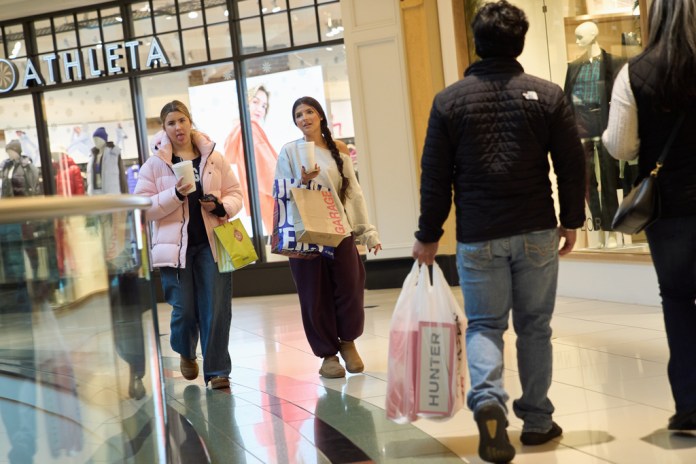
A recent Wall Street Journal article explained how the middle class feels increasingly squeezed by post-pandemic price hikes. Quotes from families seeking the light at the end of the tunnel show how American households feel stuck in an ever-growing vise by prices rising faster than their incomes can keep up.
American Politics in One Chart
A fascinating graphic in the article, taken from University of Michigan consumer survey data polling the middle class, shows how families’ perception of their personal financial situation has deteriorated:
The trendlines in the graphic show the strength of the economy in President Trump’s first term, when majorities said they felt better off personally, and only about 15-20 percent of households felt worse off in the years before the pandemic. They explain why Trump won his victory over Kamala Harris last fall; roughly two times as many people felt worse off than better off after four years of “Bidenflation.” And they also provide a clear reason for Republicans’ electoral losses this November, because the middle class’s mood has changed little since the 2024 election.
What Not to Say
So how can conservatives respond? Trying to claim inflation doesn’t exist won’t cut it because people see price increases with their own eyes. I see it every week when I go to the grocery store: A pack of raisins previously priced at $2.99 now goes for $3.29 (a 10 percent bump); the toilet paper that was $5.99 now retails for $7.29 (a 22 percent jump); the package of bratwursts that used to cost $3.50 now goes for $5.00 (a 43 percent increase). I consider myself luckier than most, having paid off my mortgage years ago, but the weekly shop still feels painful.
And pointing out that “401(k)s are double what they were a year ago,” as President Trump did when asked about high grocery prices in his 60 Minutes interview just before the most recent election, isn’t a realistic response either. While my retirement accounts have done well of late, I don’t spend time focusing on them because I’m not going to liquidate the life savings for my golden years to pay for basic staples today — and other American households shouldn’t have to either.
What to Do Instead
A better solution came in the administration’s announcement that it would lift tariffs on some foodstuffs, such as coffee and bananas, that Americans must import. It seems foolhardy ever to have imposed levies on items that our climate won’t allow us to grow in sufficient quantities domestically, but at a minimum, ending the tariffs will provide a bit of relief.
While the president will likely object, the Supreme Court may well provide a blessing in disguise if it strikes down his “reciprocal” tariffs as well. Rather than raising prices via tariffs and then giving some of that money back through taxpayer rebates — “spread[ing] the wealth around,” to use a loaded phrase from the recent past — allowing people to keep more of their own hard-earned money makes much more sense.
More broadly, businesses need the kind of certainty around tax, regulatory, and tariff policies that they saw during the first Trump administration but haven’t seen on a consistent basis during the second. Using a “red light, green light” approach on tariffs — I can’t even keep up with all the various tariff rates on different countries’ products, and I live in the nation’s capital — or political turmoil inside the agency charged with approving new drugs doesn’t give companies the clear signals they need when making decisions about whether, where, and when to invest.
As much as the president enjoys being at the center of a whirling dervish of activity, in many cases, a “less is more” approach might work better. Give clear signals to businesses, and ensure they have abundant resources to grow the economy via energy dominance, in the hope and expectation that real (i.e., after-inflation) income can return to the growth levels of Trump’s first term.
But in all cases, keep talking about the economy in ways ordinary Americans can relate to. For the foreseeable future, our politics will remain about “the economy, stupid,” and conservatives should focus like a laser beam on making life better for the middle class.
Chris Jacobs is founder and CEO of Juniper Research Group and author of the book “The Case Against Single Payer.” He is on Twitter: @chrisjacobsHC.
" Conservative News Daily does not always share or support the views and opinions expressed here; they are just those of the writer."
*As an Amazon Associate I earn from qualifying purchases