The Lie Of Third-World Assimilation Is Finally Dead
Deprecated: str_getcsv(): the $escape parameter must be provided as its default value will change in /var/www/html/breaking-news/wp-content/plugins/wp-auto-affiliate-links/aal_engine.php on line 361
The article discusses recent immigration policy changes announced by the Trump administration, which paused processing immigration applications from Afghanistan and halted applications from 19 countries under earlier travel restrictions. This follows an attack in Washington, D.C., where an Afghan immigrant, part of a large influx brought to the U.S. during the 2021 afghanistan withdrawal, attacked National Guard members. The piece highlights debates over collective obligation, with critics warning against blaming entire immigrant groups, while officials like Stephen Miller argue that mass immigration brings not just individuals but entire cultural systems that impact American society.
The author emphasizes that immigrant groups often form enclaves that retain their original cultural norms, which can strain economic, social, and political systems.An example is given from minnesota, where a Somali ethnic enclave allegedly engaged in extensive welfare fraud, with some funds reportedly funneled to the terrorist group Al-Shabaab. The article contends that cultural differences and lack of assimilation contribute to such issues, but fear of being labeled racist hampers honest discussion and action.
This pattern is not unique to the U.S.; similar problems occured in the U.K., where authorities ignored abuses due to fears of accusations of racism. The author argues that Western societies have prioritized multiculturalism at the expense of assimilation, undermining social cohesion and national unity. To address these challenges, the article calls for more selective, culturally aware immigration policies to preserve Western values and ensure societal stability.
Recently, the Trump administration announced that it had not only paused processing all immigration applications from Afghanistan, but also halted immigration applications of people from 19 countries subject to travel restrictions earlier this year. Officials are also seeking to remove legal immigrants who were born in countries the White House deemed “high risk.”
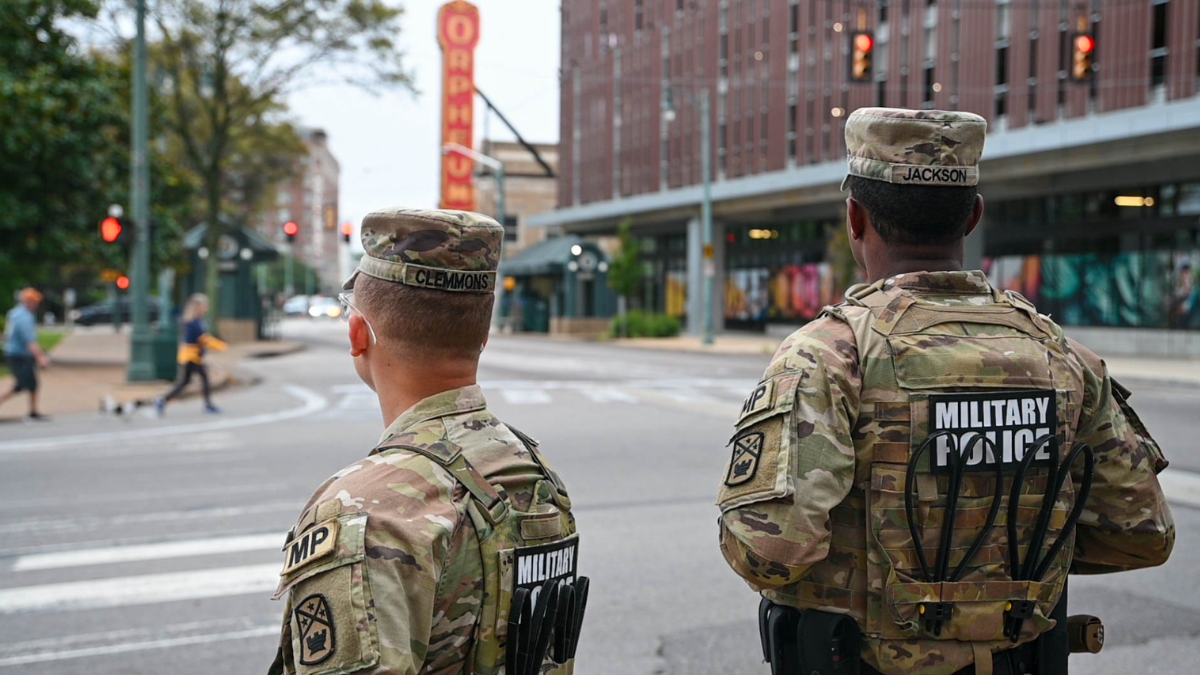
This comes on the heels of the Washington, D.C., ambush in which an Afghan national attacked two West Virginia National Guard members, killing one and leaving the other in critical condition. The alleged shooter, Rahmanullah Lakanwal, came to the U.S. during the chaotic Afghanistan withdrawal in 2021, one of thousands of unvetted Afghans brought over by the Biden administration as part of Operation Allies Welcome. Under Biden, more than 190,000 Afghans were flown into the United States — an unprecedented influx from a nation grappling with deeply unstable institutions and decades of violence.
Predictably, much of the corporate media was apoplectic at Trump’s announcements. The Wall Street Journal Editorial Board insisted that Afghan immigrants, as a group, “shouldn’t be blamed for the violent act of one man,” insisting that “collective punishment of all Afghans in the U.S. won’t make America safer.”
White House Deputy Chief of Staff Stephen Miller vehemently disagreed, calling the Journal’s claim “the great lie of mass migration.”
“You are not just importing individuals. You are importing societies,” Miller wrote. “At scale, migrants and their descendants recreate the conditions, and terrors, of their broken homelands.”
Miller is correct. His point is not about the morality or worth of individual immigrants, but rather the larger structural reality of modern immigration.
Though individual applicants are processed separately, the flows themselves are group-based, such as refugees from specific conflict zones like Afghanistan or visa categories dominated by particular regions like India. Subsequent chain migration networks expand initial arrivals into larger, and separate, culturally cohesive clusters.
When groups of immigrants arrive in significant numbers, they put tremendous pressure on the economic, fiscal, political, and perhaps most importantly, cultural fabric of the United States, not only in the short term, but generationally.
In The Culture Transplant, George Mason economist Garett Jones points out that immigrants bring distinct values and behaviors from their places of origin, passing them down to their descendants, thereby perpetuating these cultural characteristics in their adopted homeland. This observation aligns with Miller’s point: mass immigration produces ethnic enclaves rather than isolated, assimilable individuals.
Consider Minnesota, and the Somali ethnic enclave known as “little Mogadishu.” A major story revealed that fraudsters have stolen billions of dollars in taxpayer funds during Tim Walz’s tenure as Minnesota governor, with ethnic Somalis allegedly playing an outsized role in the schemes.
To make matters worse, some of the stolen millions were funneled to Somalia and specifically to the terrorist network Al-Shabaab, according to reporting by Christopher Rufo and Ryan Thorpe. The U.S. National Counterterrorism Center notes that Al-Shabaab has “killed more US citizens than any other al-Qa’ida affiliate” since 2014.
Is it fair to attribute this pattern of widespread fraud to broader cultural dynamics? According to prosecutors, 78 of the 86 people charged across various fraud cases are of Somali ancestry. The short answer is yes.
That doesn’t mean every Somali immigrant is guilty of wrongdoing by association. It does, however, reflect the predictable outcome of a large population, originating from one of the world’s least stable and most corrupt countries, forming an enclave with limited assimilation pressure.
Christopher Rufo illustrates this point by juxtaposing two immigrant cultures in Minnesota.
“The national culture of Somalia is different from the national culture of Norway. Somalis and Norwegians therefore tend to think differently, behave differently, and organize themselves differently, which leads to different group outcomes,” he writes. “Norwegians in Minnesota behave similarly to Norwegians in Norway; Somalis in Minnesota behave similarly to Somalis in Somalia.”
As a result, he continues, “the fraud networks aren’t so surprising; they reflect the extension of Somali institutional norms into a new environment with weak enforcement and poorly designed incentives.”
The problem is fairly obvious, but it’s compounded and perpetuated by Americans’ fear of being branded “racist.” The fear of “stigmatizing” minority groups has grown so acute that it now overrides the obligation to speak plainly about reality, risk, and responsibility.
This was the case in Minnesota. Prosecutor Joseph Thompson suggested the fraud was allowed to continue for so long because people were afraid of being called “racist” for noticing it.
“This was a huge part of the problem,” Thompson said. “Allegations of racism can be a reputation or career killer.”
This paralysis is not uniquely American; it is Western.
In the United Kingdom, a series of British government inquiries revealed that, for more than a decade, police and local authorities in towns such as Rotherham repeatedly ignored and covered up reports of large-scale child sexual exploitation rings, in which at least 1,400 children were abused by mostly Pakistani Muslim men between 1997 and 2013. Officials hesitated to act in part because they feared accusations of racism and Islamophobia.
Across the West, the threat of reputational destruction has been weaponized to silence legitimate concerns about conflicting cultural practices and assimilation failures. This climate has allowed the formation of parallel societies, like Minnesota’s “Little Mogadishu,” balkanizing entire regions of the United States and the West to the detriment of national cohesion.
For decades, newly arrived immigrants have been immersed in a form of anti-culture that abandons the requirements of assimilation in favor of “multiculturalism.” Such an approach is not only antithetical to maintaining a dominant host culture, but also eventually leads to its destruction, elevating every foreign culture above that of the host country. If America is to reestablish stability, unity, and cultural coherence, it must rethink the scale and origin profile of migration accordingly.
For decades, Americans and other Westerners have been told to ignore what they can see with their own eyes. But the Afghan ambush, the Somali fraud scandal, and the U.K. grooming gang cover-up reveal a truth too dangerous for elites to admit: the myth of assimilation has collapsed, and a religious adherence to multiculturalism has left Western societies unable to protect their own citizens.
The United States must confront the reality that immigration at scale imports foreign societies and entire cultural systems, many of which are antithetical to Western traditions and norms. Adopting a more selective, culturally informed immigration policy is not racist; it is realist, and required if America is to remain the “United” States.
Adam Johnston is a senior contributor to The Federalist whose work has been featured in The Blaze, WrongSpeak Publishing, and Man’s World Magazine. He is also the creator of conquesttheory.com, where he regularly writes about politics, history, philosophy, and technology. You can find him on X @adamkjohnston.
" Conservative News Daily does not always share or support the views and opinions expressed here; they are just those of the writer."
*As an Amazon Associate I earn from qualifying purchases