SCOTUS Upholds Candidates’ Ability To Challenge Election Rules
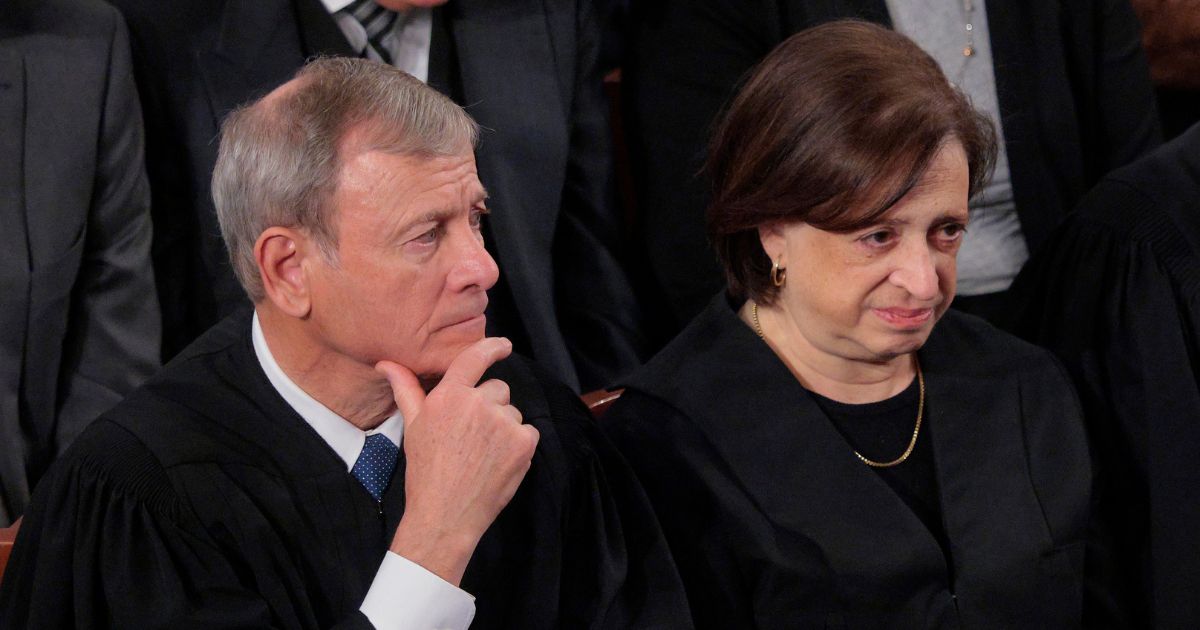
The U.S. Supreme court ruled 7-2 in Bost v. illinois State Board of Elections that federal candidates have Article III standing to challenge election rules that govern how votes are counted.Chief Justice Roberts wrote the majority opinion, saying candidates have a concrete, particularized interest in the integrity of the electoral process and are harmed when rules change the conditions of competition (he offered a 100-meter dash analogy).The case arose from Rep. Mike Bost’s challenge to an Illinois law allowing ballot counting up to two weeks after Election Day; lower courts had dismissed the suit for lack of standing, and the Court remanded the case so the merits can be considered. Justice Amy Coney Barrett concurred in the judgment (joined by Justice Kagan), but argued Bost’s standing should rest on a traditional pocketbook injury rather than a special rule for candidates. Justices Sotomayor and Ketanji Brown Jackson dissented, with Jackson warning the decision departs from the Court’s usual actual-injury standing requirements.
The U.S. Supreme Court ruled on Wednesday that federal candidates have standing to challenge rules governing their elections.
In Bost v. Illinois State Board of Elections, the high court affirmed that candidates running for public office “have a concrete and particularized interest in the rules that govern the counting of votes in their elections, regardless [of] whether those rules harm their electoral prospects or increase the cost of their campaigns.”
“Their interest,” the court determined, “extends to the integrity of the election — and the democratic process by which they earn or lose the support of the people they seek to represent.”
The decision was 7-2, with Chief Justice John Roberts authoring the majority opinion. Associate Justice Amy Coney Barrett authored a separate opinion concurring in the judgement, which Associate Justice Elena Kagan joined.
Associate Justices Sonia Sotomayor and Ketanji Brown Jackson dissented from the court’s decision.
As The Federalist previously reported, the Bost case centers around a 2022 lawsuit filed by Rep. Mike Bost, R-Ill., and other Republicans challenging the legality of an Illinois law that permits the counting of ballots up to two weeks after Election Day. The lower courts dismissed the suit over alleged “lack of standing,” prompting plaintiffs to ask SCOTUS to address the “sole question” of whether they, “as federal candidates, have pleaded sufficient factual allegations to show Article III standing to challenge state time, place, and manner regulations concerning their federal elections.”
Candidate standing has been a contentious issue in election-related litigation and was a prominent focal point in several 2020 election challenges, as The Federalist previously reported.
Writing for the majority, Roberts noted that candidates are “not ‘mere bystanders’ in their own elections” and “have an obvious personal stake in how the result is determined and regarded.” The chief justice further observed that “[d]epartures from the preordained rules cause them particularized and concrete harm.”
“The same is true of competitors in other contests. Each runner in a 100-meter dash, for example, would suffer if the race were unexpectedly extended to 105 meters,” Roberts wrote. “Whether a particular runner expects to finish strong or fall off the pace in the final five meters, all would be deprived of the chance to compete for the prize that the rules define. The fastest to run 105 meters has not won the 100-meter dash. And in much the same way, an unlawful extension of vote counting deprives candidates of the opportunity to compete for election under the Constitution and laws of the United States.”
While concurring with the court’s judgement that Bost has standing to challenge Illinois’ mail-in voting law, Barrett (and by default, Kagan) noted her disagreement with the majority’s reasoning. She expressed her belief that “Congressman Bost has standing because he has suffered a traditional pocketbook injury, not because of his status as a candidate.”
“I cannot join the Court’s creation of a bespoke standing rule for candidates. Elections are important, but so are many things in life,” Barrett wrote. “We have always held candidates to the same standards as any other litigant. … And we have repeatedly rejected requests to create special standing rules for particular litigants. … I see no reason to afford candidates favored status.”
Writing for the dissent, Jackson claimed that Bost “failed to allege that the election-related law he seeks to challenge has caused him to suffer any injury that satisfies those requirements.” She further chastised the majority for “subtly” altering the court’s “longstanding actual-injury rule to a presumption that certain kinds of plaintiffs are sufficiently aggrieved to satisfy Article III standing, regardless of whether they will experience any particularized harm.”
“In my view, this dubious departure from settled law disregards both the equal treatment of litigants and judicial restraint,” Jackson wrote. “In the end, I would not allow Bost’s suit to move forward on grounds that we have deemed insufficient to establish Article III standing for other plaintiffs. Because I believe that political candidates can and should be held to the same actual-injury requirements as other litigants, I respectfully dissent.”
The case is now remanded back to the lower courts for consideration of the merits of Bost’s lawsuit.
Shawn Fleetwood is a staff writer for The Federalist and a graduate of the University of Mary Washington. He is a co-recipient of the 2025 Dao Prize for Excellence in Investigative Journalism. His work has been featured in numerous outlets, including RealClearPolitics and RealClearHealth. Follow him on Twitter @ShawnFleetwood
" Conservative News Daily does not always share or support the views and opinions expressed here; they are just those of the writer."
*As an Amazon Associate I earn from qualifying purchases