SCOTUS Scolds Hawaii For Treating Gun Rights As ‘Second-Class’
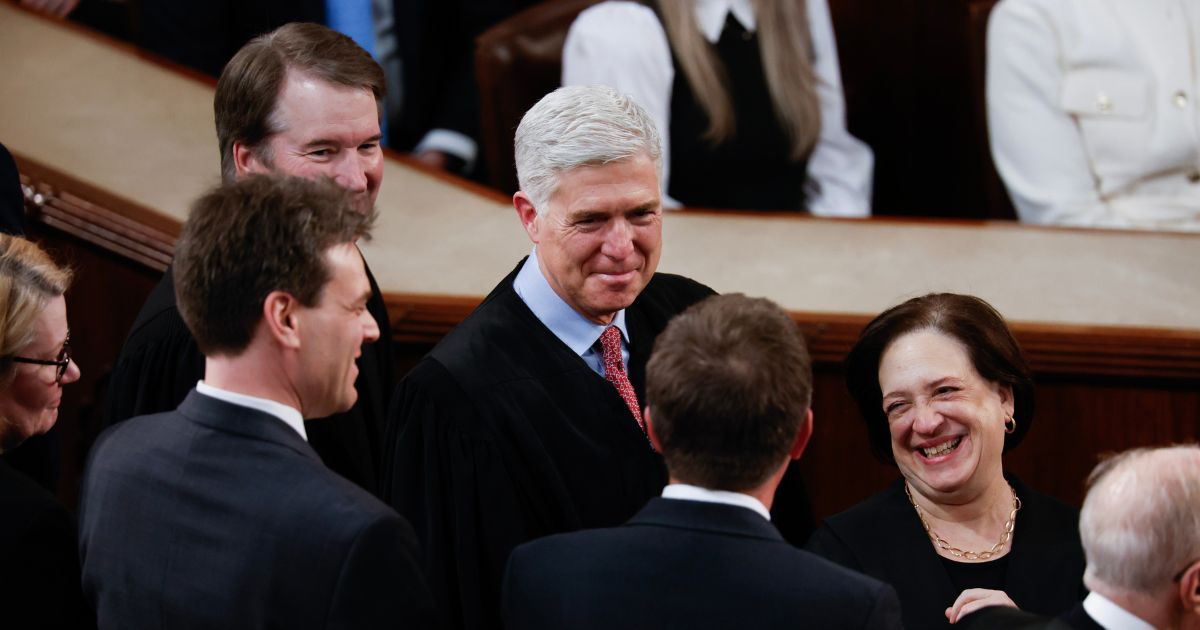
The U.S. Supreme Court intensely questioned Hawaii’s defense of a 2023 law that criminalizes carrying a firearm on private property open to the public unless the owner gives “express authorization” in the gun-rights case Wolford v. Lopez. Plaintiffs say the statute effectively narrows where permit holders may carry and seeks to evade the Court’s 2022 Bruen decision, which requires Second Amendment limits to be justified by historical tradition. Chief Justice roberts, Justices Barrett, Alito, Thomas, Gorsuch and others pressed Hawaii’s attorney Neal Katyal on why the Second Amendment should be treated differently from other constitutional rights, using hypotheticals about First and Fourteenth Amendment protections to probe apparent inconsistencies. Justices criticized Hawaii’s reliance on post-Civil War Black Codes as historical analogues, wiht several calling that citation inappropriate given those laws’ discriminatory purpose. The questioning suggested skepticism toward Hawaii’s position, but no ruling has been made; a decision is expected later in the Court’s 2025-2026 term.
SUPREME COURT OF THE UNITED STATES — The Democrat-run state of Hawaii received a brutal grilling from the U.S. Supreme Court on Tuesday for attempting to restrict their citizens’ Second Amendment rights.
The vigorous cross-examination came during oral arguments for Wolford v. Lopez, which centers around a legal challenge brought by Hawaii residents against a law restricting concealed carry throughout the state. As The Federalist previously reported, the statute criminalizes carrying a gun on private property open to the public unless the carrier receives “express authorization” to do so from the property’s owner, manager, or lessee.
Plaintiffs argued that the law attempts to “counteract” the high court’s 2022 New York State Rifle & Pistol Association, Inc. v. Bruen decision “by making the universe of places where a permit holder can actually carry a handgun exceptionally narrow.” As The Federalist’s Jordan Boyd previously summarized, in Bruen, a majority of justices “ruled that New York’s policy, which granted state bureaucrats the authority to approve or reject certain individuals for licenses to carry based on subjective material, is wholly unconstitutional because it tramples on the Second Amendment rights of Americans.”
Those arguments appeared to be top of mind for many of the court’s Republican appointees during Tuesday’s hearing.
Throughout his line of questioning, Chief Justice John Roberts probed Hawaii’s attorney Neal Katyal about the Aloha State’s apparent willingness to treat Americans’ Second Amendment right as lesser than other constitutionally protected freedoms. He specifically highlighted concerns expressed in the court’s prior decisions that the Second Amendment has often been treated as a “disfavored” and “second-level right.”
“It strikes me that one of the things that your side of the case has to come to grips with is that it is a very clear constitutional right under the First Amendment if I, for example, as a candidate for office, want to walk up to your door on private property and knock on the door and say, ‘Here … give me your vote.’ That’s exercising a First Amendment right. But you say that it’s different when it comes to the Second Amendment,” Roberts said. “What exactly is the basis for the distinction?
Katyal agreed that the Second Amendment is not a “disfavored right,” but went on to justify Hawaii’s restrictions by claiming there are “rules about the Second Amendment” and “rules that this court laid down in Bruen, in which [it] said the relevant question is whether or not the scope of the Second Amendment’s text as informed by history would say that there is a violation of the right.” He further argued that “With the First Amendment, you’ve got burden tests and all sorts of stuff that this court disclaimed in Bruen … and so it’s just going to apply somewhat differently.”
The chief justice’s continued probing on Hawaii’s seemingly disparate treatment between the Second Amendment and other freedoms like the First Amendment caught the attention of Associate Justice Amy Coney Barrett. Taking the First Amendment out of consideration, the Trump appointee posed a different hypothetical involving the 14th Amendment, in which “a state — in the absence of public accommodation laws — decides to flip the default and say [that] unless the owner affirmatively consents, black people cannot enter your home.”
Katyal expressed belief that such a scenario would be “unconstitutional,” prompting Barrett to effectively question why he believes this standard should apply to the 14th Amendment but not the Second. Following a lackluster answer from Katyal, the justice remarked, “So, my public accommodations example is right. … [A]bsent a public accommodations law or in a private residence, you could turn someone away on the basis of race [based on your argument].”
“But there is no antidiscrimination component in the Second Amendment the way there is with the equal protection clause,” Katyal replied.
Justice Barrett analogized Hawaii’s gun regulations to a state presumptively blocking solicitors on private property otherwise open to the public (in violation of the First Amendment) or to state laws preventing people of certain races from entering private property without prior… pic.twitter.com/sYfr2Vitr4
— Carrie Severino (@JCNSeverino) January 20, 2026
Hawaii’s apparent double standard for the Second Amendment prompted an interjection from Associate Justice Samuel Alito. The Bush appointee chastised Katyal for “relegating the Second Amendment to second-class status” and quipped, “I don’t see how you can get away from that.”
Justice Alito made a similar point in his questioning of the state’s attorney, in which he blasted Hawaii for “relegating the 2nd Amendment to second class status.” pic.twitter.com/q03cUq43SU
— Shawn Fleetwood (@ShawnFleetwood) January 20, 2026
Meanwhile, Associate Justice Clarence Thomas raised the question of whether, under Hawaii’s logic, there are “any other constitutional rights” that states can “place similar limitations” on when it comes to private property open to the public. Katyal argued that “there are,” citing “some First Amendment restrictions” purportedly recognized in SCOTUS precedent.
Associate Justice Neil Gorsuch, on the other hand, used his questioning to take to task a notion seemingly advocated by Associate Justice Ketanji Brown Jackson that the Wolford case is a purely property rights issue and not a Second Amendment issue. He additionally probed parties about Hawaii’s reliance on a statute derived from the Black Codes — laws passed by Southern states following the Civil War to disenfranchise freed black Americans — to defend its gun control law.
Referencing America’s traditions surrounding gun ownership, Gorsuch asked plaintiffs’ attorney Alan Beck, “Do you think the Black Codes, as they’re called, should inform this court’s decision-making when trying to discern what is this nation’s traditions?”
“I do not, your Honor,” said Beck, who subsequently added, “The 1865 law was expressly passed to discriminate against African Americans that were newly freed slaves. And I just don’t see how a law like that can be used to be analogized to a modern-day law — this modern-day law.”
Thomas, Alito, and Associate Justice Brett Kavanaugh also took issue with Hawaii’s citation of the noted Black Code law in defense of its concealed carry restrictions in their questions to Katyal.
Must Listen: Justice Alito reveals the obvious irony of citing the Black Codes as justification for Hawaii’s 2023 firearm restriction law.
“They wanted to disarm the Black population in order to help the Klan terrorize them…they wanted to put them at the mercy of racist law… pic.twitter.com/GHerQmmM7C
— Carrie Severino (@JCNSeverino) January 20, 2026
A decision in Wolford v. Lopez is not expected until sometime later in the court’s 2025-2026 term.
Shawn Fleetwood is a staff writer for The Federalist and a graduate of the University of Mary Washington. He is a co-recipient of the 2025 Dao Prize for Excellence in Investigative Journalism. His work has been featured in numerous outlets, including RealClearPolitics and RealClearHealth. Follow him on Twitter @ShawnFleetwood
" Conservative News Daily does not always share or support the views and opinions expressed here; they are just those of the writer."
*As an Amazon Associate I earn from qualifying purchases