NFL Can Keep The ‘Tush Push’ While Penalizing Rule-Breaking
The article discusses the ongoing controversy surrounding the “tush push,” a modified quarterback sneak play popularized by the Philadelphia Eagles and also known as the “brotherly shove.” The play has sparked debate in the NFL, with some teams, notably the Green Bay Packers, pushing to ban it due to concerns over player safety and difficulties in officiating. Although initially debated for potential injury risks, league data showed no injuries linked to the play, leading to its retention by a narrow vote after support from Eagles players.
Currently, the main challenge is officiating the play, as referees struggle to accurately call penalties like offsides or false starts when players are tightly packed and officials are far from the line of scrimmage. The article argues that banning the play outright is not the solution, especially since the play has been perfected by one team and similar subjective rulings have existed in NFL history. Rather, it suggests improving the use of instant replay technology (“replay assist”) to accurately detect infractions during the play, ensuring that penalties are called fairly without targeting the prosperous execution of the “tush push.”
The author emphasizes that rule changes should penalize actual rule violations, not the success or aesthetic qualities of a particular play, warning against unfairly singling out the Eagles.The article concludes that NFL owners should find a balanced approach that maintains fair play while leveraging available technology to aid officiating.
The controversy surrounding the most disputed play in football is back. That is, if it ever went away in the first place.
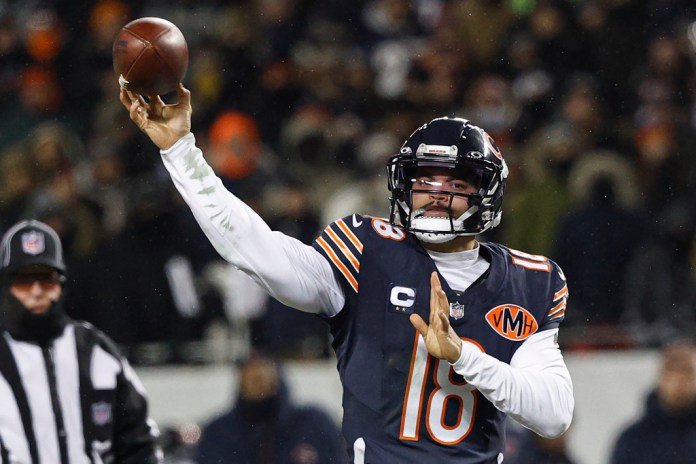
The famous, or infamous, “tush push” has found itself in the spotlight again this NFL season. The modified quarterback sneak made famous by the Philadelphia Eagles — who prefer calling it the “brotherly shove,” in homage to the city’s nickname — continues to spark fierce opinions on both sides. Ahead of the Eagles’ Nov. 10 game against the Green Bay Packers, the team that proposed banning the play during the offseason, an ESPN feature profiled the backstory about last year’s failed ban.
As with many issues in our current political environment, the discussion around the play has become polarized and binary — to ban it or not to ban it. But the simplistic debate misses the fact that the NFL can act to make the play legal without unfairly targeting the team (Philadelphia) that has gone to great lengths to perfect its execution.
Tough to Officiate?
During the offseason, the debate surrounding the “tush push” centered largely around player safety — the idea that bunching players closely together in something approaching a rugby scrum would lead to more injuries. But when league executive (and former Eagles cornerback) Troy Vincent revealed the play had resulted in zero injuries, an impassioned plea by retired Eagles center Jason Kelce meant league owners retained the play by a two-vote margin.
This season, the focus has turned toward officiating the play. With players closely bunched together, and officials 50 feet or more away from the action, referees cannot necessarily determine whether a defender has jumped offsides (a defensive penalty) or whether an offensive player moved before the snap of the ball (a penalty on the offense). Following several controversial quarterback sneaks during the Eagles’ Super Bowl rematch with the Kansas City Chiefs, Fox rules analyst Dean Blandino said in September, “I am done with the ‘tush push,’ guys. It’s very hard to officiate.”
This argument, while it has some validity, misses another key point. As I noted in the spring, the proposal to ban the play had its own inherent subjectivity. The Packers’ original proposal banned “an offensive player from pushing a teammate who has lined up directly behind the snapper and receives the snap, immediately at the snap.” The ambiguous phrases “directly behind the snapper” and “immediately at the snap” could prove difficult to officiate.
Keep in mind that a blanket prohibition on pushing runners forward, an element of NFL rules for many years, also includes a subjective element. Ironically, one of the most famous plays in Packers’ history also involved a quarterback sneak. In the climax of the famous 1967 “Ice Bowl” between the Packers and the Dallas Cowboys, quarterback Bart Starr lunged forward for a touchdown while his fullback raised his arms behind him — not to signal a touchdown but to signal the officials that he was not pushing Starr forward in violation of league rules at the time.
Why Not Officiate It Better?
As a longtime Eagles supporter, I hold a clear bias in favor of the “tush push.” That said, I have enough objectivity to recognize when my own team commits an infraction. For instance, on the first (and only) “tush push” in the Eagles’ Nov. 10 game against the Packers, guard Landon Dickerson clearly committed a false start by moving before the snap. Conversely, in the Eagles’ game against the Detroit Lions the following week, the Eagles received a penalty when a Lions defender crossed the line of scrimmage before the snap — as commentators pointed out, a penalty that should have accrued to the defense rather than the offense.
The solution to this purported problem is obvious: If columnists can complain that everyone in the stadium can see the infractions via instant replay, then why not use said cameras to call the penalties? In recent years, the NFL has expanded its use of instant replay, now called “replay assist,” in the form of “eyes in the sky” to supplement the officials on the ground. Why not use it here?
Penalize Rule-Breaking, Not Success
Using replay assist to untangle the “tush push” seems like a far better alternative than coming up with another rule that could well have its own unintended consequences. Altering a sport’s rules just because one particular play looks aesthetically unappealing, or because one team can execute it particularly well, violates the sense of fair play that accompanies sport.
That said, in its feature on the controversy, ESPN reported that “the [NFL] league office essentially recruited the Packers to submit the proposal … because they don’t have a singular owner who would balk at such a request.” (The Packers are owned by hundreds of thousands of individual shareholders.) Rather than going along with the league office in what amounts to an attempt to target a single team, NFL owners should come up with an alternative that penalizes rule-breaking but not the success of the “tush push.”
Chris Jacobs is founder and CEO of Juniper Research Group and author of the book “The Case Against Single Payer.” He is on Twitter: @chrisjacobsHC.
" Conservative News Daily does not always share or support the views and opinions expressed here; they are just those of the writer."
*As an Amazon Associate I earn from qualifying purchases