Iran and US silent as negotiations in Geneva conclude without resolution
The third round of Geneva talks between U.S. peace envoys and Iranian diplomats ended without a resolution.In the meeting, Steve Witkoff and Jared Kushner met Iran’s Foreign Minister Abbas Araghchi, with Oman-hosted mediators describing the dialog as constructive and noting “significant progress,” though sources (Axios) indicated the Iranian position was disappointing. Oman said negotiations would resume soon after consultations in the capitals, with Vienna expected to host technical discussions next week. The report frames the diplomacy as urgent but inconclusive,as Washington maintains a hard line on denuclearization and shows a large military presence near the Strait of Hormuz,while Democrats prepare a War Powers resolution to constrain the president’s use of force against Iran.
Iran and US silent as negotiations in Geneva conclude without resolution
The much-anticipated third round of negotiations between U.S. peace envoys and Iranian diplomats have ended without fanfare.
Steve Witkoff and Jared Kushner wrapped their talks with Iranian Foreign Minister Abbas Araghchi in the early evening, leaving their venue in Geneva, Switzerland. The mediating hosts from Oman insisted that it was constructive dialogue that produced “significant progress.”
But Witkoff and Kushner were reportedly “disappointed” with the Iranian position, according to a source familiar with the matter, per Axios.
Oman indicated that negotiations — which at this point have dragged on for weeks with little evidence of breakthroughs — will “resume soon after consultation in the respective capitals.”
If the mediators are correct, the negotiations will resume in Vienna next week with “discussions on a technical level.”
But it marks an anticlimactic and less-than-reassuring end to a series of negotiations that have been defined by their sense of urgency.
Trump announced on Feb. 19 that there would be a short window of time in which he would allow negotiations for the complete denuclearization of Iran to continue.
“I would think that would be enough time — 10, 15 days, pretty much maximum,” Trump said.
He warned that “it’s going to be unfortunate for [Iran]” if an agreement is not reached in that time window, which would hypothetically expire between Sunday and Friday of next week.
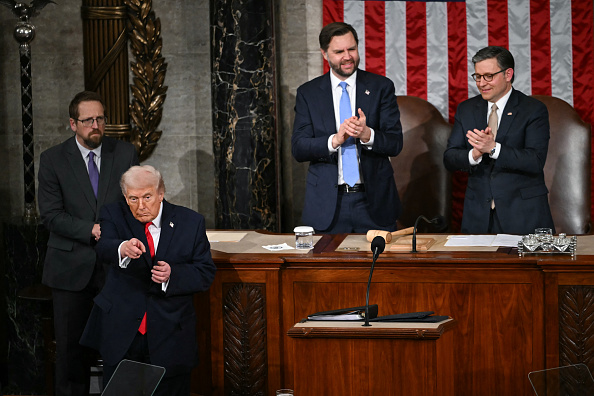
The president already highlighted the lack of progress during his State of the Union address on Tuesday night.
“We are in negotiations with them,” Trump told the gathered members of Congress. “They want to make a deal, but we haven’t heard those secret words: ‘We will never have a nuclear weapon.’”
The administration has gone to great lengths to show the Islamic Republic that its demands are backed up by very real threats to the existence of the regime.
TRUMP’S SPARSE COMMENTS ON IRAN AT THE STATE OF THE UNION KEEPING EVERYONE GUESSING
The U.S. military is currently amassing an overwhelming armada of aircraft carriers, naval destroyers, and other small combat vessels in the Strait of Hormuz.
But Trump may be facing a time limit of his own.
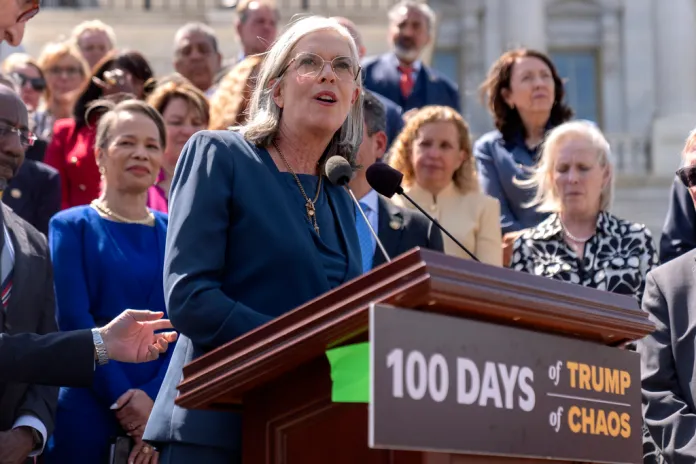
Democrats are currently preparing to force a vote on legislation that would rein in Trump’s capacity to use military force against Iran.
“As soon as Congress reconvenes next week, we will compel a vote of the full House of Representatives on the bipartisan Khanna-Massie War Powers resolution,” Democratic leadership wrote in a joint statement. “This legislation would require the president to come to Congress to make the case for using military force against Iran.”
Recognizing that the Iranian regime is “brutal and destablizing,” the Democrats still oppose undertaking a “war of choice in the Middle East” — a proposition they described as “reckless.”
" Conservative News Daily does not always share or support the views and opinions expressed here; they are just those of the writer."
*As an Amazon Associate I earn from qualifying purchases