How ‘Wicked’ Is Deeply Tied Into Feminism’s Occult Origin Story
In this excerpt from Carrie Gress’s Something Wicked: Why Feminism Can’t Be Fused with Christianity, Gress profiles 19th-century feminist Matilda Joslyn Gage and uses her life and ideas to trace a line from early feminism to modern social problems. Gage-raised in an abolitionist, freethinking household-was a leader in teh suffrage movement who publicly attacked Christianity as an institution that subjugated women, split with more pragmatic activists over alliances with Christian temperance groups, and embraced occult beliefs such as theosophy and séances.Gress highlights Gage’s influence on L. frank Baum (and later cultural works like Wicked) through occult interests shared with Baum’s family. The excerpt then advances gress’s central argument: that first-wave feminist ideas helped lay intellectual groundwork for the Sexual Revolution and broader cultural shifts that, she contends, produced new forms of “slavery” and social decay-abortion, addiction, trafficking, pornography, family breakdown, and loneliness among the elderly. The piece concludes by asking whether historic feminist leaders truly benefited women and society or inadvertently opened the door to harmful consequences. A brief author note identifies Gress as a scholar at the Institute of Human Ecology (Catholic university),a mother of five,and the author/editor of several books and an online magazine.
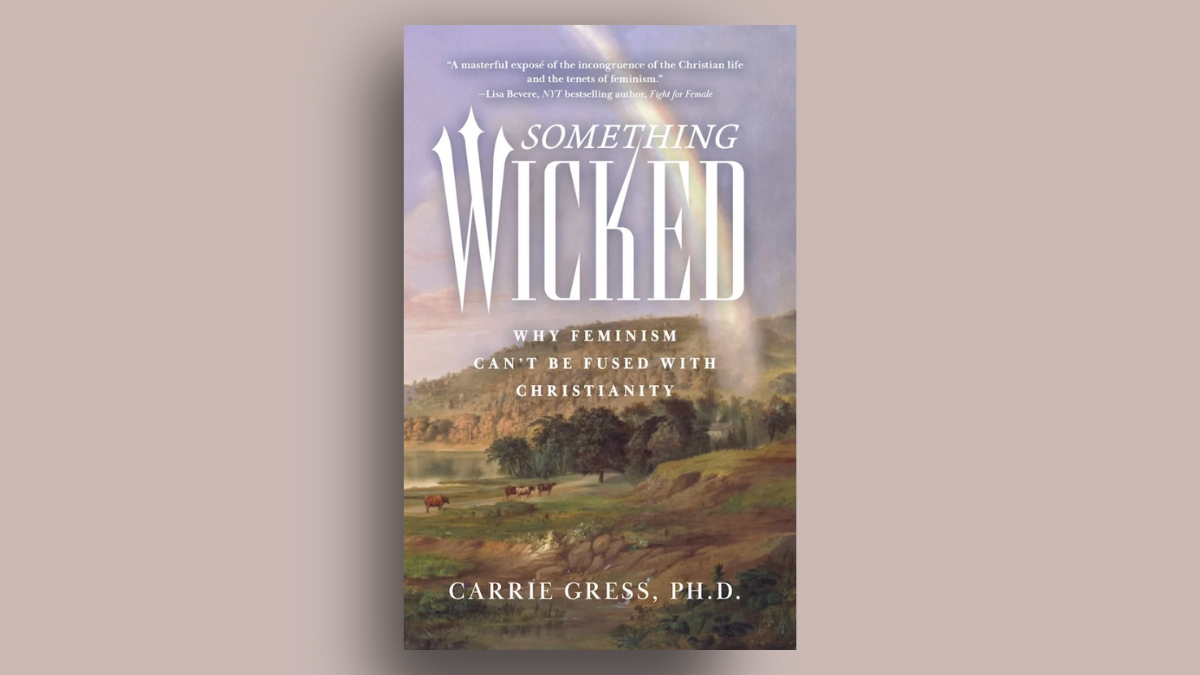
The following is an excerpt from the newly published Something Wicked: Why Feminism Can’t Be Fused with Christianity by Carrie Gress.
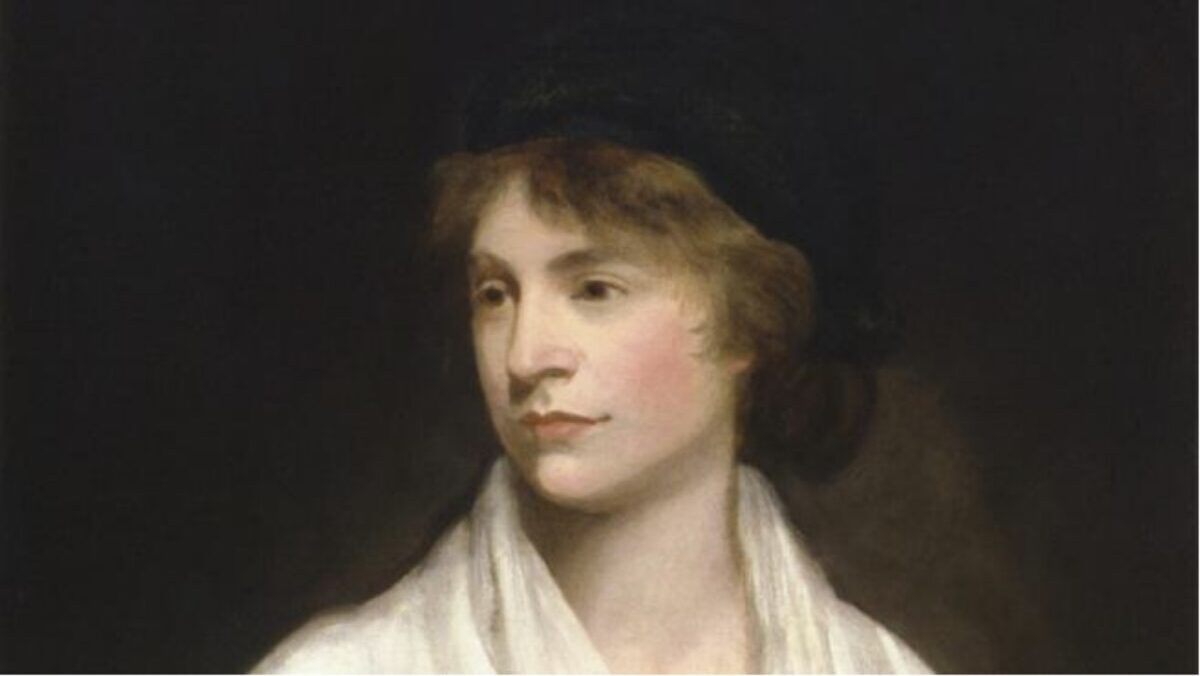
One of the least known but most influential feminists of her day was Matilda Electa Joslyn Gage (1826–1898). Born to Helen and Hezekiah Joslyn, freethinkers and abolitionists, Matilda’s parents courageously hid runaway slaves on the Underground Railroad under their kitchen floorboards in Cicero, New York. Hezekiah was a follower of Thomas Paine, whose 1776 pamphlet Common Sense stirred up support for the American Revolution. His daughter, Matilda, followed in his intellectual footsteps on abolition, but also directed her efforts to what she saw as the enslavement of women. “Viewing her through the Christian Ages,” Gage wrote in her book Women, Church, and State, “we find woman has chiefly been regarded as an element of wealth; the labor of wife and daughters, the sale of the latter in the prostitution of a loveless marriage, having been an universally extended form of domestic slavery.”
Gage worked alongside Elizabeth Cady Stanton and Susan B. Anthony in the early days, when they founded the National Women Suffrage Association (NWSA), and she coauthored with them the six-volume work The History of Women’s Suffrage (1881–1922). In 1893, Gage wrote her own book, Woman, Church, and State: The Original Exposé of Male Collaboration Against the Female Sex. She worked ardently to publicly discredit Christianity, engaging in public confrontation for her radical view, such as her 1886 publicity stunt at the unveiling of the Statue of Liberty. “She showed up,” as the Smithsonian reports, “on a cattle barge with a megaphone, shouting that it was ‘a gigantic lie, a travesty and a mockery’ to portray liberty as a woman when actual American women had so few rights.”
Gage eventually broke ranks with Stanton and Anthony, who joined forces with the Women’s Christian Temperance Movement, a move that Gage found disagreeable because of the group’s openly Christian principles. Stanton and Anthony were, however, more pragmatic, believing that aligning themselves with the much larger temperance movement was good for their effort.
Despite the break, Gage’s influence did not end there. Like most of her first-wave comrades, Gage was involved in various occult activities, including theosophy, seances, manifesting, and a firm belief in both good and bad witchcraft. She spent years researching witchcraft, even moving to Salem, Massachusetts, to investigate the Salem Witch Trials. “Those condemned as sorcerers and witches, as ‘heretics,’ were in reality the most advanced thinkers of the christian [sic] ages,” Gage wrote.
The biggest stage for Gage’s thoughts came after her death, through the creativity of her son-in-law, L. Frank Baum. Gage had involved her daughter Maud and her later famous son-in-law in seances, teaching them about good and bad magic, and the occult mishmash of teaching found in theosophy. Baum was said to be “especially interested in Theosophy’s description of the astral plane, a world of emotion and illusion where one’s ‘astral body’ could go for a supernatural experience reached through mental powers.” At least three copies of a book on the topic circulated through the Gage and Baum households.
After Gage’s death in 1898, Baum described the impetus for The Wonderful Wizard of Oz, which came in a fit of inspiration:
This is when the magic happened. The story “moved right in and took possession,” Baum later said. The inspiration came at the twilight of a winter’s day. . . . “It came to me right out of the blue,” he said. “I shooed the children away.” Word paintings came out through his pencil onto scraps of paper: A gray prairie. A terrifying twister. A mystical land ruled by both good and wicked witches. A trio of comical characters who join a girl on her quest, a journey to a magical city of emeralds controlled by a mysterious wizard. “The story really seemed to write itself,” he told his publisher.
But Gage’s influence didn’t end with Baum’s story The Wonderful Wizard of Oz. The stage musical and now feature film Wicked is based on Gregory Maguire’s 1995 novel crafted around the unnamed witch in The Wonderful Wizard of Oz, given the name Elphaba, in homage to L. Frank Baum’s initials.
Though she is not well known, in many respects Gage embodied first-wave feminism leadership in her rejection of Christianity, questionable use of outrageous tactics, and relentless fixation on womanhood apart from what feminists considered the enslavement of family. These early threads, which emerged from Enlightenment thinkers and helped to fuel the tyrannies of the 20th century, have not led women to some kind of Promised Land. They have instead channeled women into a different kind of slavery, not to the freedom women like Gage thought they were embracing.
Like Baum’s hidden dictator, the curtain is badly in need of being pulled back to expose the real dangers of feminism’s hidden face. For today’s slavery is of the kind scarcely imaginable by the likes of Stanton, Anthony, and Gage: the aborted child; the drug addict prostituting herself for her next hit; trafficked and drugged toddlers and tweens; the porn-addicted executive; young girls boasting their “body count” on social media; the adopted son abused by his two dads; the tween abused by her mom’s live-in boyfriend; the purposeless 20-something wedded to gaming; the elderly woman alone and sickly in a nursing home. The new slavery that feminism wrought is the crisis of use and disposal. Most people believe these societal scourges were simply the result of the Sexual Revolution, not realizing that the vision, ideas, and execution of the Sexual Revolution were loaded decades before by feminism’s first wave.
All of which begs the question: Did feminist women like Gage, Stanton, Anthony, and the others who came after them, such as Charlotte Perkins Gilman, Simone de Beauvoir, Betty Friedan, Kate Millett, and Gloria Steinem, do something truly good for women and society, or, despite what may have been the best of intentions, was it something else?
Perhaps something wicked this way comes . . .
Carrie Gress is a scholar at the Institute of Human Ecology at Catholic University of America. A mother of five, she is the author of 11 books, including “The End of Woman: How Smashing the Patriarchy Has Destroyed Us,” and the forthcoming “Something Wicked: Why Feminism Can’t Be Fused with Christianity.” She is the editor of the online women’s magazine Theology of Home.
" Conservative News Daily does not always share or support the views and opinions expressed here; they are just those of the writer."
*As an Amazon Associate I earn from qualifying purchases