How polar war fears are coloring virtually every aspect of Trump’s foreign policy
The article examines how the melting Arctic is shaping former President Trump’s second-term foreign policy, turning the region into a potential military and economic battleground.U.S. officials warn that receding ice is enabling China and Russia to expand territorial claims and project power northward, citing increased “buzzings” of American assets near Alaska.
In response, the Trump management has pursued a range of measures to bolster Arctic presence: ambitious shipbuilding plans, efforts to acquire Greenland, a proposed “golden Dome” missile-defense system, and a pledge to commission dozens of new icebreakers.Experts, though, question whether a naval buildup alone can deter a nuclear threat delivered via the polar route; Russia still far outnumbers U.S. icebreaking capability.
Diplomacy and alliances play a central role. Trump’s close relationship wiht Finland’s president, Alexander Stubb, produced a deal for Finnish-built icebreakers and highlighted Finland’s military readiness and Arctic expertise. Some officials argue the president’s cautious posture toward Russia partly reflects a desire to avert a polar-origin nuclear strike.
The arctic’s commercial value is another driver: newly accessible shipping lanes and untapped oil, rare earths, and minerals make the region attractive for resource competition.U.S. moves-including actions in Venezuela-are framed as efforts to deny China and Russia strategic energy and resource leverage.
Technological approaches are emphasized too: uncrewed and autonomous systems are promoted as cost-effective tools for Arctic surveillance and operations. The administration has also restricted Chinese drone imports to spur domestic manufacturing and reduce reliance on foreign supply chains.
the piece portrays a multifaceted strategy-military buildup,diplomatic outreach,resource competition,and technology development-framed by officials as “peace through strength” to deter adversaries and secure American interests in a rapidly changing Arctic.
How threats of a polar war are coloring virtually every aspect of Trump’s foreign policy
In Focus delivers deeper coverage of the political, cultural, and ideological issues shaping America. Published daily by senior writers and experts, these in-depth pieces go beyond the headlines to give readers the full picture. You can find our full list of In Focus pieces here.
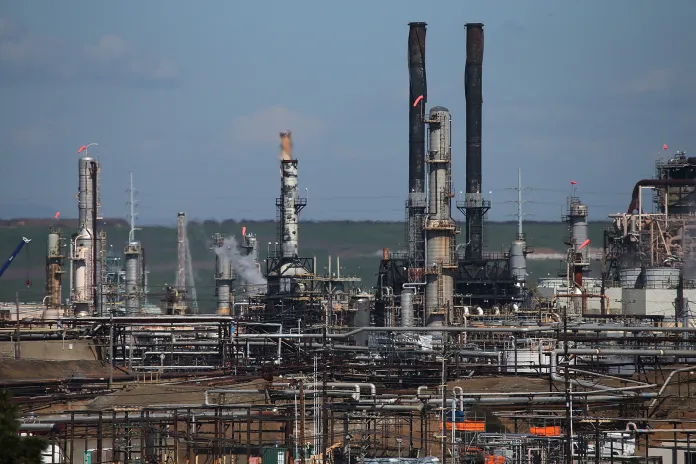
Multiple seemingly disconnected touchstones of President Donald Trump’s second-term agenda underscore the Arctic’s emergence as an economic and possible military battleground.
Northern ice sheets are receding, which senior Trump administration officials tell the Washington Examiner is providing China and Russia with both the means and the incentive to expand their territorial claims in the Arctic. Officials noted more than a half-dozen “buzzings” of American assets off the coast of Alaska alone during Trump’s first year back in office as evidence of Beijing and Moscow’s plans for the region.
But China and Russia aren’t moving unopposed. Trump took several big swings of his own in 2025 to beef up America’s presence up north, most notably massive shipbuilding initiatives, a redoubled effort to acquire Greenland from the Kingdom of Denmark, and the ordered buildout of a so-called Golden Dome missile defense system.
Trump’s polar focus has also manifested in more nuanced ways, specifically his recent intervention in Venezuela, a budding relationship with a fresh-faced European dignitary, and even negotiations to end the war in Ukraine.
Asked how a polar war factors into the president’s calculus, senior White House officials told the Washington Examiner the president “has consistently leveraged ‘peace through strength’ foreign policy to deter our adversaries and advance American interests around the world.”
“The president’s first instinct is always diplomacy,” one official added. “More foreign leaders want to meet with President Trump than with his recent predecessors because this President has effectively restored our country’s strength on the world stage.”
How it started vs. How it’s going
The Arctic theater rose to the president’s desk during his first term, championed as a pet issue of Trump’s former national security adviser Robert O’Brien.
But, despite Trump’s steady pace of arming in the Arctic, experts question whether a linear increase of Naval power would provide adequate defense capabilities in a doomsday scenario, namely, the launching of nuclear ballistic missiles over the pole by Chinese or Russian forces.
“The recession of the Arctic ice makes it much easier for the Russians and the one arm of their military that is not decrepit — their ballistic submarine fleet — for them to pop up in the Arctic in the event of a nuclear emergency,” Trump’s former Veterans Affairs Secretary Robert Wilkie told the Washington Examiner, noting that China is also “trying to build a ballistic missile boat capability” to complement its land-based Intercontinental Ballistic Missile systems.
Before taking the VA job, Wilkie, a former reserve Naval Intelligence officer, was undersecretary of defense for personnel and readiness. During Trump’s first term, Wilkie said he observed several NATO allies, including Canada, the United Kingdom, and Denmark, actively draw down their Arctic military capabilities. Wilkie clarified that the recent addition of Sweden and Finland to the alliance shows that America, Europe, and its allies are once again recognizing the vulnerabilities of a possible strike across the Arctic.
The Fins are the world’s top producers of icebreakers, ships outfitted for navigating the Arctic’s ice-packed waterways. Heading into Trump’s second term, the American fleet boasted only two operational icebreakers. By comparison, the Russian Navy currently operates 40, while the Chinese Navy maintains five of its own.
TRUMP’S TARIFFS AREN’T RAISING PRICES, BUT THEY ARE SHRINKING AMERICA’S MANUFACTURING WORKFORCE
Trump pledged in January 2025 to commission 48 new icebreakers by the end of his term, a goal that Lyle Goldstein calls “unfortunately, pie in the sky.”
“We are not going to have an icebreaker fleet anywhere on par with Russia,” Goldstein, the director of Defense Priorities’ Asia program and a former professor at U.S. Naval War College, told the Washington Examiner flatly last September. “No, not ‘anytime soon.’ I mean that I don’t think it’ll ever happen.”
One former national security official from Trump’s first term similarly suggested that they “suspect” fears of being “out-gunned” in a direct Arctic conflict have led Trump to handle Russian President Vladimir Putin with “kid gloves” during talks on Ukraine.
“Yes, people will point to President Trump’s relationship with Putin during the first term here. Democrats will throw all the usual ‘Russia, Russia, Russia’ bull**** lines,” the former official offered. “But answer this. Why do you think President Trump was tiptoeing around him in the first place? The whole Russia dossier has been debunked. This has always been about averting a nuclear strike, and the Arctic, by my bet, is exactly where one would come from.”
Trump’s new man in Europe
Last October, Trump and an emerging European ally announced a deal that seemed to undermine Goldstein’s icebreaker assessment.
On October 9, 2025, the president hosted Finland’s President Alexander Stubb at the White House, his third visit since the 2024 election, during which they unveiled a joint operation where Finnish manufacturers would build 11 new icebreakers for the Pentagon.
“We’ve been building them for over 100 years, and speaking of price and time, I think we’re the country that can provide them for half the price in half the time that others have,” Stubb said of his country’s expertise on the subject. “And I think it’s a huge strategic decision by the president as well, because we all know that the Arctic is important strategically, militarily, and in terms of the economy as well.”
Stubb, 57, a college golfer who played at Furman University in South Carolina, had previously visited Trump at Mar-a-Lago, where Trumpworld insiders tell the Washington Examiner the two leaders quickly formed a close relationship over their shared love of the links.
“I see Finland’s outsized influence in Washington as a direct result of the close personal relationship between Stubb and Trump,” Jason Moyer, a fellow with the Atlantic Council, said at the time. “Finland and Stubb’s pragmatism, knowledge of Russia, consistent support for Ukraine, and the fact that it has specialised technological know-how in its icebreaker ecosystem, provide Finland a larger-than-expected, and certainly well-deserved, role in the trans-Atlantic relationship.”
But Wilkie notes that Finland is more than just a shipbuilding hub. It has successfully defended its shared border against overt and subversive Russian invasions for more than a century, which, along with their shared golfing passion, helps explain Trump’s fostering of his bond with Stubb.
TRUMP ORDERS NEW SANCTIONS ON IRANIAN OFFICIALS COORDINATING DEADLY CRACKDOWN ON PROTESTERS
“They have more artillery tubes than any country on the planet, including the North Koreans, and their artillery works,” Wilkie explained. “Everyone in Finland, every male under the age of 60, has a uniform. They are required to perform several years of active military service, and then they are in the reserves and go on maneuvers every year until they’re 60. That’s something that we need to take advantage of.”
Race for resources
Even if military conflicts don’t fully spill over into the Arctic, the region is ripe for economic battles.
Not only do receding ice sheets make way for possible trade routes, but they also provide growing access to the region’s virtually untouched fossil fuel and mineral reserves.
“The reason that Russia and China are so interested in the trade routes are they’ll make crazy money,” one senior Trump administration official explained. “But also the fact that you have rare earths, critical minerals, oil, everything else that is just opening up under the ice sheets that are relaxing slowly over the course of decades, it’s just going to be a mad scramble to be able to capitalize on those.”
Staking a claim to Arctic mineral reserves, in addition to those present in Greenland, would go a long way toward undermining the U.S.’s dependence on China’s rare-earth monopoly.
Furthermore, securing the oil reserves would mirror a secondary aim of Trump’s actions in Caracas.
“Venezuela sits on roughly 20% of the world’s oil supply, and though they refine just a fraction of that amount, more than 80% of their crude oil exports are consumed by China and Russia alone. If you cut off the supply, you cut off their ability to wage war, in Ukraine, Taiwan, or anywhere else across the globe,” one former Trump White House official told the Washington Examiner. “The same would follow in the Arctic. We need those resources to, yes, lower prices at home, but more so to prevent China and Russia from gaining new leverage ahead of future potential conflicts.”
Drone with the wind
As the Arctic’s global importance evolves, so too does the technology that the Trump administration and its allies can employ in the region.
Last December, the Center for European Policy Analysis published a white paper touting “uncrewed and autonomous vehicles,” otherwise known as drones, as “cost-effective ways to enhance domain awareness, deterrence, and resilience across intelligence, targeting, logistics, and crisis-response missions.”
And while the U.S. has employed drones for decades, Trump has taken active measures to boost domestic manufacturing and break China’s monopoly on the commercial market.
Last November, the Trump administration initiated an import ban on the top Chinese-manufactured drones and drone components, citing national security concerns.
Trump allies say the move will directly spur the growth of America’s drone manufacturing sector, for use in commercial markets and beyond.
TRUMP VOICES CONFIDENCE IN VENEZUELA’S INTERIM GOVERNMENT: ‘SEEM TO BE AN ALLY’
“Drones are already transforming industries from logistics and infrastructure inspection to precision agriculture, emergency response, and public safety,” the order reads. “The time has come to accelerate testing and to enable routine drone operations, scale up domestic production, and expand the export of trusted, American-manufactured drone technologies to global markets. Building a strong and secure domestic drone sector is vital to reducing reliance on foreign sources, strengthening critical supply chains, and ensuring that the benefits of this technology are delivered to the American people.”
" Conservative News Daily does not always share or support the views and opinions expressed here; they are just those of the writer."
*As an Amazon Associate I earn from qualifying purchases