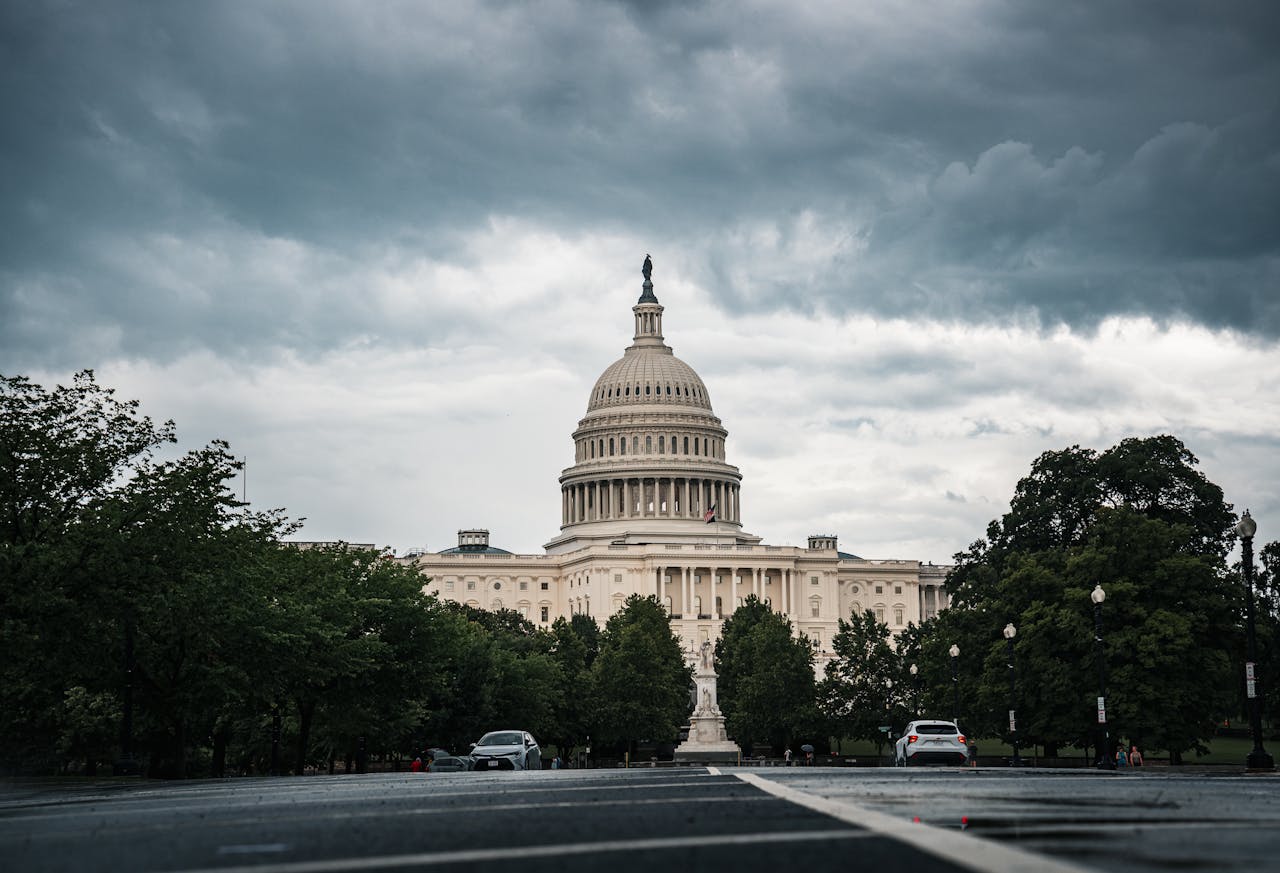
House appropriators eye smaller spending deal to avoid ‘nightmare’
House appropriators are considering passing a smaller, three-bill “minibus” spending package before the end of the year to avoid a challenging and contentious funding battle in january. This approach contrasts with the Senate’s preference for a larger, five-bill package that includes more controversial funding items, such as defense and Labor-HHS. House appropriations Committee Chairman Rep.Tom Cole (R-OK) believes the smaller package is more manageable and likely to pass before lawmakers leave for the holidays, while the larger Senate package faces delays and objections, notably from fiscal hawks concerned about earmarks.
Top Democrats, including Rep.Rosa DeLauro (D-CT), agree that moving smaller packages now woudl be more practical, warning that waiting for a larger deal could lead to a “nightmare” of last-minute negotiations in january. Both parties acknowledge ongoing disagreements and a lack of trust following a recent 43-day government shutdown, which centered on expiring healthcare subsidies due at the end of the year. Key programs like food stamps and WIC have secured funding, reducing pressure points for the upcoming negotiations.
Despite challenges, Republican and democratic leaders emphasize the importance of passing at least some appropriations bills to avoid another shutdown and to maintain control over federal spending, rather than resorting to continuing resolutions or risking a government closure. The debate highlights tensions within and between chambers over timing, scope, and the conditions attached to funding bills as Congress approaches a January 30 deadline to finalize government appropriations.
House appropriators eye smaller spending deal to avoid ‘nightmare’ January
House appropriators want to move forward with a smaller set of spending bills before the end of the year, fearing the larger package preferred by the Senate will create a last-minute fight for Congress in January.
Appropriators in the lower chamber are eyeing a three-bill “minibus” that they could put on the floor in December, before lawmakers depart for the Christmas recess. However, the Senate appears to be dead-set on a five-bill package that includes funding for the Pentagon and other agencies that are more controversial.
Defense funding is typically linked to money for the Labor Department and Health and Human Services, which, when considered together, make up almost two-thirds of discretionary spending.
According to Rep. Tom Cole (R-OK), chairman of the House Appropriations Committee, the three-bill minibus is the easiest route, and he thinks it’s unlikely a five-bill package will get done by the end of 2025.
The House and Senate have agreed on top-line spending levels for several of the nine remaining bills that have yet to pass before a Jan. 30 deadline, the chairman said, but they aren’t in agreement on the Energy and Water, Defense, and Labor-Health and Human Services bills.
Cole declined to outright say which three bills he wants to package together, but he suggested that bills to fund the Interior and Homeland Security departments are ready to go. He also said he’d like to move on the Transportation, Housing, and Urban Development measure.
Majority Leader John Thune (R-SD) and his deputies have been working through objections to the five-bill package in their chamber and could jump-start the process on the Senate floor before the end of the year. But it’s unlikely anything will pass before January, when lawmakers return from their recess.
Cole said he thinks if they have a set that is “lower and smaller and less complex, then we should pass those three.”
“They’d like to get Labor-H and Defense done. I would, too, I mean, I’m with them, I want to get all of them done. But I think that makes more sense in January,” Cole said.
The chairman added they are “prepared to move several bills now,” and a vote on a narrower minibus would be “easier” to pass on the House side and would likely help get Republican members on board with future packages.
“The Senate tends to want to wait to the last minute and try and jam everything in,” Cole said. “That’s not the best way to proceed in our view, but I don’t get to make that decision.”
Rep. Rosa DeLauro (D-CT), the top Democrat on the House Appropriations Committee, echoed Cole, arguing that right now, there’s little movement on the bills. She said the Senate has to “sort it out” before real progress can be made and agreed that, instead of waiting on a five-bill package that’s likely to face delays and pushback, “let’s conference on the bills that we can, and let’s move forward.”
She said a five-bill minibus would also likely receive opposition from the Freedom Caucus, whose members traditionally loathe large spending packages.
“I want to do as many as we can and as quickly as we can,” she said. “I’m afraid that we’ll get nothing done before the holidays.”
“That means an unbelievable January,” she added. “A nightmare, trying to get anything done.”
One of the chief roadblocks in the Senate is coming from fiscal hawks who want to see Republicans adhere to a self-imposed ban on earmarks that many senators have ignored for years. When asked if removing earmarks would fly in the House, Cole said Thursday, “That’s not going to happen.”
Thune also dismissed the possibility in a brief interview with the Washington Examiner on Wednesday.
As of now, no appropriations bills are scheduled for a floor vote in the House. GOP leadership is also bogged down with its annual defense policy bill, calls to address expiring Obamacare subsidies, and demands for a vote to ban stock trading.
But Rep. Ralph Norman (R-SC), a Freedom Caucus member, said he thinks it would be a mistake to save votes on appropriations bills until January, calling it “the main thing.”
“I know of no other particular bill that ought to take front and center stage, except getting the appropriations done and getting the budget in place,” he said.
He noted there are still a couple of weeks in December to work on the bills, and said that “bad things happen” when leadership compresses the time frame.
“If we are sitting here Jan. 20 and not passed a, if not all, appropriations bills, it’s going to be difficult for all of us to swallow,” he said. “January, to not have made progress on the nine, is just really unacceptable.”
Appropriators navigate new funding talks with lack of trust
Appropriators are approaching the next funding deadline, set for the end of January, with a lack of trust that spawned a 43-day government shutdown, the longest in U.S. history. That impasse centered on expiring Affordable Care Act subsidies, which are set to expire on Dec. 31, with Democrats walking away without the extension they had been seeking.
Public disagreements between the “four corners,” or the appropriations chairs and ranking members in the House and Senate, also signal choppy waters ahead. DeLauro refused to sign off on the three-bill minibus that passed in November to end the shutdown, saying that the rug was pulled out from under her.
Come December, the ACA tax credits will either expire or a plan will be in place to extend them, which may mute the healthcare messaging for the next funding battle. Funding has also been secured for key programs, such as food stamps and the Women, Infants, and Children program for new mothers, which were key pressure points that helped break the logjam during the last shutdown.
“They don’t need that anymore in January,” Rep. Blake Moore (R-UT), vice chairman of the House GOP conference, said of the healthcare debate. “I feel like they probably got that with the longest [shutdown] in history. … I think the messaging opportunity has come and gone for the Democrats. They’re going to take whatever they can out of that and use it for the midterms.”
SENATE FISCAL HAWKS MAKE THEIR DEMANDS IN SPENDING TALKS WITH THUNE
Cole said that pushback from Democratic leadership in either chamber “handcuffs” DeLauro, with whom he has a longtime working relationship. His argument for the next funding fight is that Democrats have the greatest control over the spending process if they stay at the table and work out a deal, alluding to Trump’s repeated fights over the power of the purse.
“If you’re worried about dealing with the administration, you’re stronger passing an appropriations bill than not,” Cole said. “You want to maximize the power of the executive branch? Have a CR or have a shutdown. And if they haven’t learned that lesson after 43 days, then it’s beyond me to teach it to them, but they’re better off negotiating in my view.”
" Conservative News Daily does not always share or support the views and opinions expressed here; they are just those of the writer."
*As an Amazon Associate I earn from qualifying purchases