High court considers pastor’s lawsuit over previously violated law
The Supreme Court is considering whether a mississippi pastor, gabriel Olivier, can challenge the constitutionality of a local law banning protests near a public amphitheater outside designated zones, despite having been previously punished for violating that law. Olivier argues that the ordinance infringes on his First and 14th Amendment rights by limiting where he can preach. lower courts dismissed his lawsuit, stating he could not challenge a law he had already been convicted of breaking. During oral arguments, justices questioned how a ruling in Olivier’s favor would affect his past conviction and probation. Olivier’s lawyer maintained that any relief would only prevent future enforcement, not overturn past penalties.The city argued that Olivier must have his conviction expunged before suing, but justices expressed doubts about this requirement. A decision in the case is expected in the coming months.
Supreme Court grapples with allowing pastor to sue over law he has previously violated
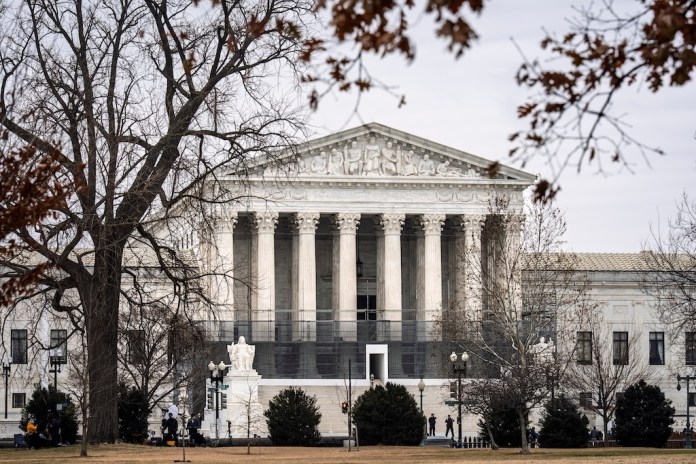
The Supreme Court considered on Wednesday whether to allow a Mississippi pastor to challenge the constitutionality of a law for future enforcement despite facing punishment for a previous violation of the law.
Gabriel Olivier filed a lawsuit against a local law in Brandon, Mississippi, which bans protesting near a public amphitheater outside of designated zones, for which he has previously been punished for violating, in a bid to protect against future enforcement. Olivier alleges that the law violates the First and 14th Amendments because it bars him from preaching outside the designated zones, but lower federal courts tossed his lawsuit, claiming he could not challenge a law that he had previously been punished for violating.
The justices questioned Olivier’s lawyer, Allyson Ho, throughout Wednesday’s arguments over how Olivier’s court-ordered probation for a previous violation would have been affected by a ruling from a federal court blocking the city ordinance.
Chief Justice John Roberts specifically asked if a favorable ruling would affect his probation for the previous violation. Ho responded that a possible injunction would only affect future enforcement.
“The only effect that the federal judgment has is forward-looking. It is prospective relief. It prohibits the enforcement of the ordinance against him on a forward-looking basis. It does not reach back to an effect on a backward-looking,” Ho responded.
The lower federal appeals court had tossed the lawsuit because it would undermine his previous conviction for breaking the ordinance. Ho argues that rejecting the lawsuit on that rationale was inconsistent with the Supreme Court’s precedents.
“A prior conviction shouldn’t forever bar a claim for future protection,” Ho told the justices. “Olivier’s past prosecution makes him a perfect plaintiff because past enforcement is good evidence that the threat of future enforcement is real. The court should confirm that the federal courthouse doors remain open to persons like Olivier whose rights have already been infringed.”
G. Todd Butler, the lawyer for the city of Brandon, faced questions from multiple justices over his argument that Olivier cannot bring a lawsuit about the statute until he has his previous conviction expunged, an argument multiple justices appeared skeptical of.
“What you’re basically saying is simply because they’ve been previously convicted, they cannot seek prospective relief 20 years from now unless they get an expungement. But if they’re barred … for some procedural reason [from getting the expungement], they have no protection?” Justice Sonia Sotomayor asked Butler.
Butler responded by arguing that “unless and until he is able to achieve a favorable termination” of his conviction, the person would be barred from bringing a constitutional challenge to the law. He argued to the high court that a favorable ruling in his challenge of the constitutionality of the law would undoubtedly affect his prior conviction, despite his claims to the contrary, and should be barred until he has that conviction expunged.
“As petitioner conceded during oral argument at the [U.S. Court of Appeals for the 5th Circuit] and as the United States concedes in its briefing here, a declaration that the ordinance is unconstitutional on its face would call into question the prior conviction. If this court applies the same rule that it has for the past three decades, those concessions end this case,” Butler argued.
GABE OLIVIER: THE SUPREME COURT SHOULD RULE IN FAVOR OF RELIGIOUS FREEDOM, AND NOT JUST FOR MY SAKE
A decision in Olivier v. City of Brandon is expected within the coming months, with final decisions for the current Supreme Court term expected to be released by the end of June.
Wednesday’s arguments concluded the first of two weeks of oral arguments the Supreme Court has scheduled for December. Next week, the high court is slated to hear arguments in cases about the president’s ability to fire independent agency heads and limits on coordinated spending between political parties and candidates.
" Conservative News Daily does not always share or support the views and opinions expressed here; they are just those of the writer."
*As an Amazon Associate I earn from qualifying purchases