Government Shutdown Ends As Trump Declares ‘Great Victory’ With Spending Package
President donald Trump signed funding bills to reopen the federal government after a weekend shutdown, in an Oval Office ceremony with GOP lawmakers including House Speaker Mike Johnson. The House approved the package by a narrow bipartisan margin, while the Senate had already approved five funding bills through September and a continuing resolution to fund the Department of Homeland security through February 13. Trump framed the package as fiscally responsible, claiming it cuts wasteful spending while supporting safety, security, and prosperity. Democrats argued for separating DHS funding to address immigration enforcement reforms following a Minneapolis shooting,and some Republicans sought to add the SAVE Act,which would require citizenship proof for voter registration; Trump said there could be no changes,and Senate Leader Schumer warned it would be a dealbreaker. The debate over immigration enforcement reforms is expected to continue, with Democrats seeking changes such as ending roving patrols and racial profiling and ensuring accountability and body cameras, though GOP opposition remains likely. The package comes as part of ongoing negotiations in a congress where parts of the administration’s immigration agenda had already been enacted earlier, and with the government funded only temporarily given the upcoming end of the fiscal year on September 30. The prior shutdown lasted 43 days the previous year, underscoring the recurring need to resolve funding gaps.
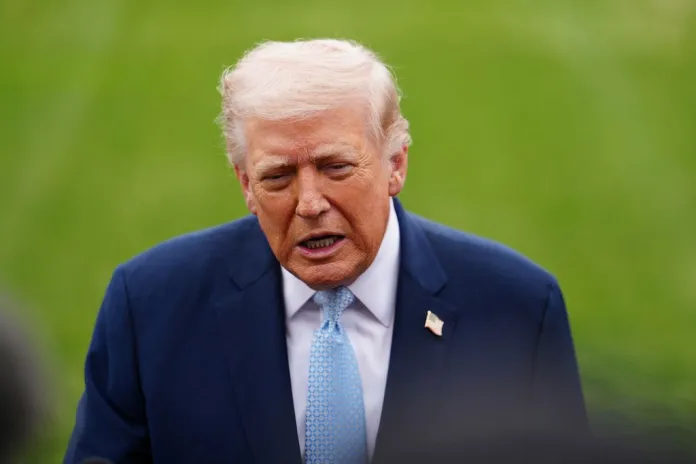
President Donald Trump signed bills to reopen the federal government on Tuesday evening, after a partial shutdown that started over the weekend, in an Oval Office ceremony surrounded by GOP lawmakers, including House Speaker Mike Johnson (R-LA).
The House voted by a narrow bipartisan margin to fund the government following its closure on Friday. The Senate previously approved the five funding bills that will last until September, as well as a continuing resolution that will fund the Department of Homeland Security (DHS) through Feb. 13.
“This bill is a great victory for the American people. Instead of a bloated and wasteful omnibus monstrosity full of special interest handouts, we’ve succeeded in passing a fiscally responsible package that actually cuts wasteful federal spending, while supporting critical programs for the safety, security, and prosperity of the American people,” Trump said.
Many Democrats called for DHS funding to be split from the other appropriations bills to prevent a prolonged shutdown, as they want restrictions on the Trump administration’s immigration enforcement policies following the shooting of Alex Pretti in Minneapolis.
Even after the White House reached an agreement with Senate Democrats, there were still hiccups in the House to get the spending package through, including some GOP lawmakers who wanted the SAVE Act — a bill to require documentary proof of citizenship in order to register to vote — thrown into the package.
The SAVE Act legislation has already passed the House, but it has yet to be voted on in the Senate. On Monday, Trump posted to Truth Social that “there can be NO CHANGES at this time” to the bill, as Senate Minority Leader Chuck Schumer (D-NY) also said that the SAVE Act would be a dealbreaker if it were placed into the spending package.
As for the negotiations on immigration enforcement, a lively debate is expected to unfold in Congress as Democrats want to see reforms, like the end of masking for immigration officers and changing the types of warrants used, but the proposals could face an uphill battle with the Republican trifecta. Much of the Trump administration’s immigration agenda, including hiring more ICE agents, was already signed into law by the president in July as part of the “One Big Beautiful Bill Act.”
“Democrats want commonsense reform for ICE: End the roving patrols and racial profiling. Take accountability and abide by the same rules as local police. Masks need to come off, body cameras need to stay on—no secret police in the United States of America,” Schumer posted to X on Tuesday.
The government was only funded for a short period of time following the 43-day-long shutdown last year over Affordable Care Act subsidies, which meant that Congress would have to go back to the drawing board in January anyway. The federal government’s fiscal year ends on Sept. 30.
" Conservative News Daily does not always share or support the views and opinions expressed here; they are just those of the writer."
*As an Amazon Associate I earn from qualifying purchases