Female Athletes Gear Up To Defend Women’s Sports At SCOTUS
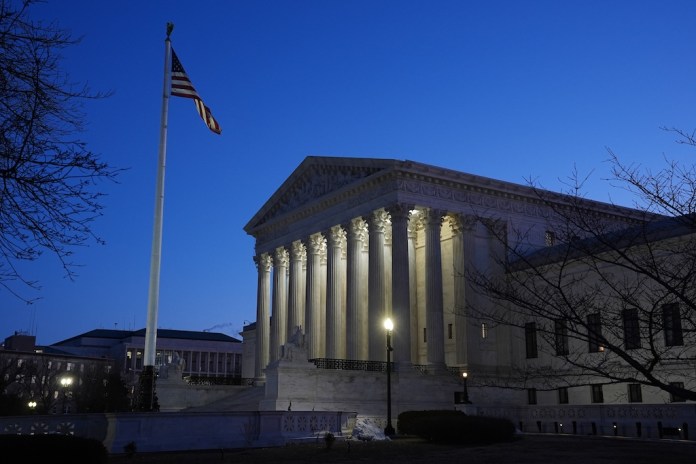
Female athletes,backed by Idaho and West Virginia officials,are preparing to defend state laws that restrict transgender-identifying males from competing in women’s sports at the U.S. Supreme Court. Oral arguments in Little v. Hecox and West Virginia v. B.P.J. are scheduled for Jan. 13.
Alliance Defending Freedom (ADF), representing several female competitors, argues the statutes protect fairness, equal prospect, privacy, and safety in women’s athletics. ADF CEO Kristen Waggoner said some clients lost medals, scholarships, and rankings after competing against transgender men; she criticized opposing arguments as redefining sex by self-identification rather than biology.
Idaho Attorney General Raúl Labrador and West Virginia Attorney General John McCuskey defended their states’ laws as consistent with Title IX and the 14th Amendment’s equal protection clause, saying the statutes do not ban participation but preserve competitive fairness by treating biological males and females differently where it matters in sport.
A central legal issue is whether transgender people should be treated as a suspect class, which would trigger strict scrutiny of the laws. In last year’s U.S. v.Skrmetti decision, three justices argued in concurrences that “transgender” is not a suspect class, but that view did not become binding precedent. Idaho and West Virginia officials and ADF hope the Supreme Court will address the suspect-class question in these cases.
The outcome will determine whether the challenged state laws are upheld under equal protection or Title IX standards and could set broader precedent on how sex and transgender status are treated in law.
Female athletes, along with two Republican-led states, are gearing up to defend women’s sports from transgender activists at the U.S. Supreme Court next week.
“Women deserve equal opportunity, fairness, and privacy, and states have the right to recognize biological distinctions when those distinctions matter, and they matter greatly on the athletic field,” Alliance Defending Freedom CEO and Chief Counsel Kristen Waggoner said during a Thursday press conference. (ADF is representing several female athletes in the litigation.)
The Supreme Court will hold oral arguments on Tuesday in Little v. Hecox and West Virginia v. B.P.J. Both cases center around leftist-backed challenges to laws passed by Idaho and West Virginia protecting the sanctity of women’s sports from trans-identifying men.
The justices will address the question of whether these statutes violate the 14th Amendment’s equal protection clause, or, for the West Virginia case, Title IX.
[READ:[READ:The Federalist’s Guide To The 2025 Supreme Court Term]
During Thursday’s press conference, Waggoner spoke about the experiences of several of ADF’s female clients, who she said “have lost medals, scholarships, podium spots, and even future opportunities because men competed in women’s sports.” One such example was that of Madison Kenyon and Mary Kate Marshall, two Idaho State University track and cross-country competitors who “both suffered losses in their rankings after being forced to compete against a man,” according to Waggoner.
“Idaho and West Virginia’s laws preserve equal opportunity, fairness, and safety for women, and the ACLU’s arguments would deny women those equal opportunity within the law, essentially redefining sex, not based on biology, but self-identity, or self-declared identity,” Waggoner added.
The presser also featured remarks from Republican Attorneys General Raúl Labrador (Idaho) and John McCuskey (West Virginia), both of whom defended their states’ laws and appeared optimistic about their chances for success at the nation’s highest court.
In addressing attendees, McCuskey characterized such policies as “common sense” and argued that his state’s statute “actually supports and bolsters the original intent — and the continuing intent — and purpose of Title IX as it relates to the equal protection clause.”
“This law treats all biological males and all biological females identically,” McCuskey said. “And importantly, it doesn’t ban anyone from playing sports, and so in those two very important ways, the West Virginia law is noticeably compliant with the equal protection clause and will easily pass muster under any test that the Supreme Court decides to put forth towards it.”
One issue raised during the press conference was transgender activists’ abuse of suspect classification to challenge policies recognizing biological reality.
Suspect classification refers to a group of individuals who have faced historic discrimination within the law (for example, on the basis of race). When a court determines a specific law or government policy is tailored toward a suspect class, that statute or policy will be placed under a heightened standard of review (strict scrutiny).
In last year’s U.S. v. Skrmetti decision — in which the court upheld (6-3) a Tennessee law prohibiting harmful trans procedures from being administered to minors — three justices (Clarence Thomas, Samuel Alito, and Amy Coney Barrett) across two concurring opinions argued that “transgender” is not a suspect class. However, because those were concurring opinions and not a part of the majority decision, no precedent was established by the high court on the issue.
When asked by The Federalist about whether they would be echoing the aforementioned justices’ argument before the high court next week and whether they believe a majority of justices would address the issue in final decisions in the cases, Labrador emphasized that “it’s very important that they address this issue.”
“It’s one of the most important issues, I think, in both of these cases, and we are hoping that they finally address it for this case and all cases in the future,” Labrador said. “And just for the record, we do not believe [transgender] is a suspect class.”
In addressing The Federalist’s question, McCuskey echoed remarks from his opening statement, reaffirming his belief that West Virginia’s law “passes muster” under whichever test SCOTUS applies to it. He further said that it is “probably irrational to believe that the Supreme Court will analyze this under the height of the highest of scrutinies because … nothing in the case indicates that it should be.”
Waggoner also weighed in, highlighting how SCOTUS “hasn’t recognized a new protected class in over 50 years.” Referencing their Skrmetti concurrences, she noted that Alito, Barrett, and Thomas “made clear as to why that is — that it doesn’t satisfy the constitutional test.”
“Even if it did satisfy the constitutional test, though, there’s no question that the record in both Idaho and West Virginia’s cases would more than meet that test,” she concluded.
Oral arguments in Little v. Hecox and West Virginia v. B.P.J. are slated to begin at 10 a.m. ET on Tuesday, Jan. 13.
Shawn Fleetwood is a staff writer for The Federalist and a graduate of the University of Mary Washington. He is a co-recipient of the 2025 Dao Prize for Excellence in Investigative Journalism. His work has been featured in numerous outlets, including RealClearPolitics, RealClearHealth, and Conservative Review. Follow him on Twitter @ShawnFleetwood
" Conservative News Daily does not always share or support the views and opinions expressed here; they are just those of the writer."
*As an Amazon Associate I earn from qualifying purchases