Axing Teachers’ ‘Professional’ Label Helps Everyone But Colleges
Last month, the U.S. Department of Education removed the “professional” designation from several college degrees-including nursing, accounting, social work, and education-which affects students’ eligibility for certain financial aid. This decision, part of the big Beautiful Bill, aims to prevent students from accumulating large debts for careers often seen as vocations rather than traditional professions. Critics argue this could limit access to these fields and cause shortages in high-demand areas,but the author contends that economic principles suggest employers should raise salaries to attract workers,and students can choose more affordable programs.
The controversy also raises questions about the true nature of professionalism in these fields and whether existing coursework and certification adequately prepare workers. Drawing on personal teaching experience,the author believes much required academic preparation offers limited practical benefit. Rather, he advocates for apprenticeships and hands-on training overseen by experienced professionals, which would better equip newcomers, reduce costs, alleviate workforce shortages, and allow mentors to focus on improving their work.
Ultimately, the author suggests that removing the “professional” label challenges colleges profiting from expensive credentials and encourages a shift toward more practical, experience-based training. This approach could benefit aspiring workers and organizations by better aligning education with real-world demands.
Last month, in accordance with a provision from the Big Beautiful Bill, the Department of Education stripped the “professional” label from a list of specific college degrees, including those in nursing, accounting, social work, and education. This move primarily affects those seeking financial aid to complete these programs at accredited universities. No longer can prospective teachers or nurses take out massive loans only to find themselves hopelessly in debt for the duration of their careers.
Naturally, this hurt the feelings of many in these “former” professions. Most of the resentment seems to be based on the meaning of “professional” and what it signifies. A profession is more than a mere job. A professional is more educated, competent, and respectable than the typical worker.
Those who feel this way are also the ones who consider their work a vocation, a transcendent calling to a timeless occupation representing a key pillar of human civilization. I’ll admit to occasionally indulging in this conceit, usually in response to those who take joy in belittling teachers. Nevertheless, it’s easy to take this kind of thinking too far and over-romanticize one’s employment, blithely ignoring the innumerable occupations necessary to keep society going.
In practical terms, there isn’t much of an argument for keeping the “professional” designation. Some complain that this might limit access to these professions for those who struggle financially. However, this just means students in North Texas hoping to do social work may have to reconsider going to the famously expensive Southern Methodist University in Dallas to earn their degree and instead attend the humbler University of Texas at Arlington or the University of North Texas.
For those who take issue with that reality, they should recognize that everyone ultimately has a responsibility to live within their means. Simply invoking the magical term “access” does not overturn the basic laws of economics, nor does it really apply in this situation. There are plenty of affordable programs for nursing or education that the less affluent can enter into if they so choose. If this affects the bottom lines or diversity quotas of the programs at more expensive colleges, they can offer their own financial assistance to those who qualify or lower the costs of tuition altogether.
The other argument against removing “professional” from these degrees is that it will lead to shortages, particularly in high-need areas such as nursing. Again, the assumption is that if certain people cannot receive large college loans for particularly costly programs in a specific field in demand, then there will be fewer people working in such fields. Yet again, this ignores the basic laws of economics: If employers need more employees, they should pay them higher salaries to attract more applicants and help offset the costs of training.
In truth, much of the indignation over the reclassification stems from a deep insecurity about the actual knowledge and skills that supposedly qualify these jobs as “professions” in the first place. Does being a teacher or nurse really require all the coursework, observation hours, and certification exams to do what they do? And do these requirements adequately prepare them to do good work?
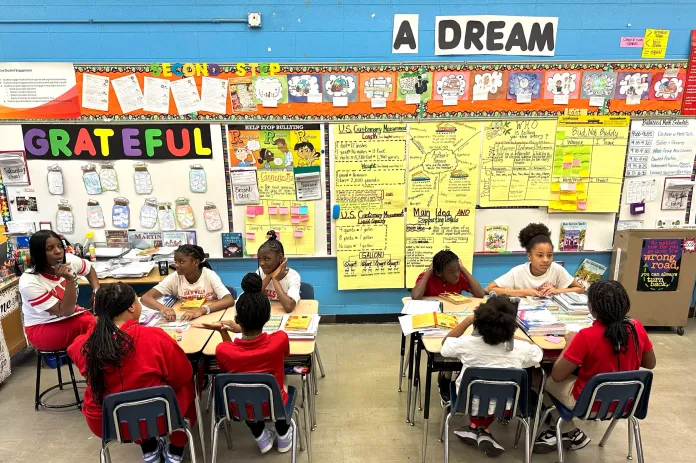
Speaking as a certified high school English teacher, I would say the majority of the education classes I had to take did little to enhance my instruction or inculcate the fortitude and discipline required to run a thriving classroom. Even in the few classes that proved marginally helpful, did I really need to pay thousands of dollars to hear from a professor who was once a classroom teacher so many decades ago?
The same applies to the exams I took to become a teacher. To study for those, I took practice tests, skimmed through a few pedagogy booklets, and applied deductive logic to each exam question. Did any of this tested content, which separates me from the noncertified laymen, equip me to teach Shakespeare or the five-paragraph essay? At most, I picked up some of the jargon and acronyms commonly used in staff meetings and professional development sessions.
None of this is to suggest that teaching, or any other job with similar certification requirements, should not demand some level of preparation and academic achievement. Effective job performance involves the continual development of technique and knowledge, and this happens through rigorous practice and study. In my experience, most of the teachers who struggled and burned out were the ones who lacked preparation and assumed that having a college degree and gaming the exams would be enough to prepare them for managing a class of rowdy kids who didn’t want to learn.
Rather, I hope this whole conversation about what counts as “professional” ends up encouraging institutions and employers to rethink how specialized workers are trained and integrated into complex organizations. It’s time to replace the current method of assigning so much college coursework and tedious exams with apprenticeships that offer hands-on experience and practical knowledge.
As philosopher and motorcycle mechanic Matthew Crawford elucidates in his book The World Beyond Your Head: On Becoming an Individual in an Age of Distraction, true mastery and innovation happen through active participation and mentorship. Citing the work of the Hungarian chemist Michael Polanyi, Crawford asserts that successful scientists become such through their work in the lab under the supervision of a master: “through submission to authority, in the social context of the lab, one develops certain skills, the exercise of which constitutes a form of inquiry in which the element of personal involvement is ineliminable.” If this is the case with scientific research, then it is certainly the case in teaching, nursing, or accounting.
Besides better preparing incoming professionals both intellectually and emotionally, such apprenticeships are far cheaper for the apprentice and more helpful for the mentor. If hospitals or schools have shortages, they can easily fill this with professionals in training rather than load more work on overburdened employees. Better still, while these apprentices gain experience taking on more of the routine tasks, their mentors would be freed to improve processes at their job, continue their education, and periodically reflect on their work.
The only losers from this arrangement would be the colleges that have profited from using the “profession” label as a rationale for demanding so much time and money for their certification. Even as the representatives of these programs pretend to be upset about access, shortages, or the lack of regard for their programs, they themselves are the main perpetuators of these problems.
Thus, for the sake of aspiring professionals looking for gainful employment and the organizations looking for well-trained talent, today’s workers need to learn on the job and gain experience instead of wasting away in college. The economy could use them, and if they are anything like I was when I was 18 years old, they are more than ready to get started.
Auguste Meyrat is an English teacher and freelance writer in the Dallas area. He is the founding editor of The Everyman, a senior contributor to The Federalist, and has written for essays for The American Mind, The Stream, Religion and Liberty, The Blaze, and elsewhere. He is also the host of “The Everyman Commentary Podcast.” Follow him on X.
" Conservative News Daily does not always share or support the views and opinions expressed here; they are just those of the writer."
*As an Amazon Associate I earn from qualifying purchases